Gagik I
The Splendid
Bagratuni Dynasty — 989–1017 AD
Bagratid Kingdom
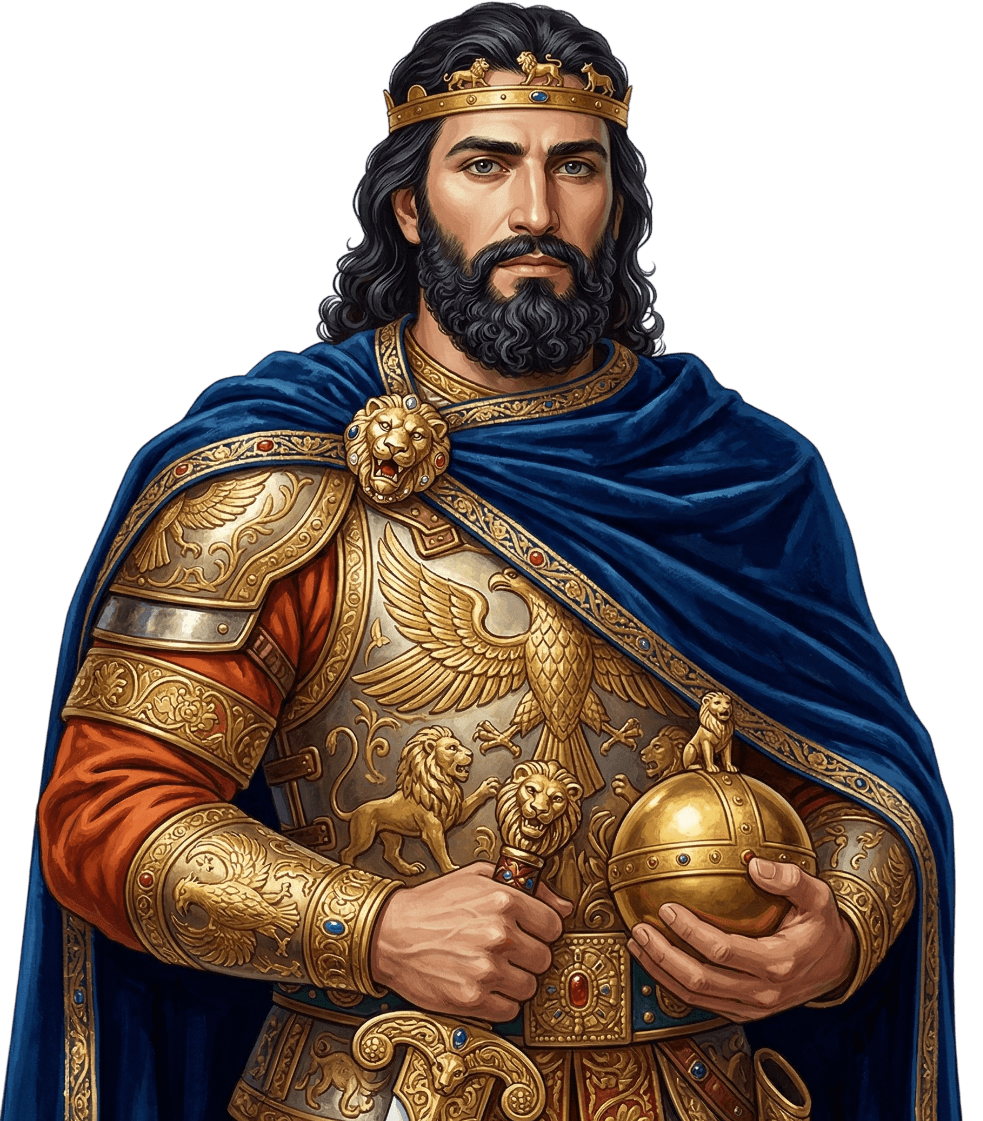
Gagik I reigned from 989 to 1020 AD, a period during which the Kingdom of Armenia (Bagratid Armenia) reached the absolute height of its power and prosperity. Succeeding his brother Smbat II, he assumed the grand title of Shahanshah (King of Kings) of the Armenians, Georgians, and Albanians, successfully unifying various fractured provinces—including Vayots Dzor, Khachen, Nakhichevan, and Dvin—into a singular, centralized state. His reign was defined by an unprecedented era of uninterrupted peace and cultural flowering. Under his leadership, the Armenian army was increased to a strength of 100,000 soldiers, ensuring the security of borders that stretched from the Kura River to Apahunik near Lake Van. Gagik I oversaw the continued enrichment of the capital city, Ani, and fostered a thriving economy based on international trade and the development of major urban centers like Dvin and Kars.
Gagik I reigned between 989 and 1020 AD, leveraging the economic and military foundations of his predecessors to consolidate the Armenian Highlands. He established a standing professional army of 100,000 and used this force to suppress local separatism, most notably defeating Davit "the Landless" of Tashir-Dzoraget after a three-month campaign in 1001 AD. In international affairs, he acted with absolute sovereignty; while other Armenian and Georgian princes expressed submission to the Byzantine Emperor Basil II in 1000 AD, Gagik I pointedly refused to attend the summit. His alliances with the Georgian and Iberian monarchs allowed him to crush external threats, such as the Emir Mamlan at the Battle of Tsumb in 998 AD, securing the frontiers of Mets Hayk (Greater Armenia) from Shamkor to Vagharshakert.
Economic Prosperity and the Pahlavuni Influence
The era of Gagik I is remembered as an age of immense wealth and urban expansion supported by a flourishing foreign trade. With the help of the influential Pahlavuni family, the king fostered the development of fortresses and urban hubs like Bjni, Amberd, and Marmashen. The capital city of Ani flourished as a global trade center, while the reunification of provinces like Kogovit and Ttsaghkotn from Vaspurakan brought further stability to the heartland. Gagik’s domestic policy prioritized national unity based on a shared national identity, resulting in a stable domestic environment where culture and craftsmanship reached new levels of sophistication.
The Architectural Legacy and the Royal Image
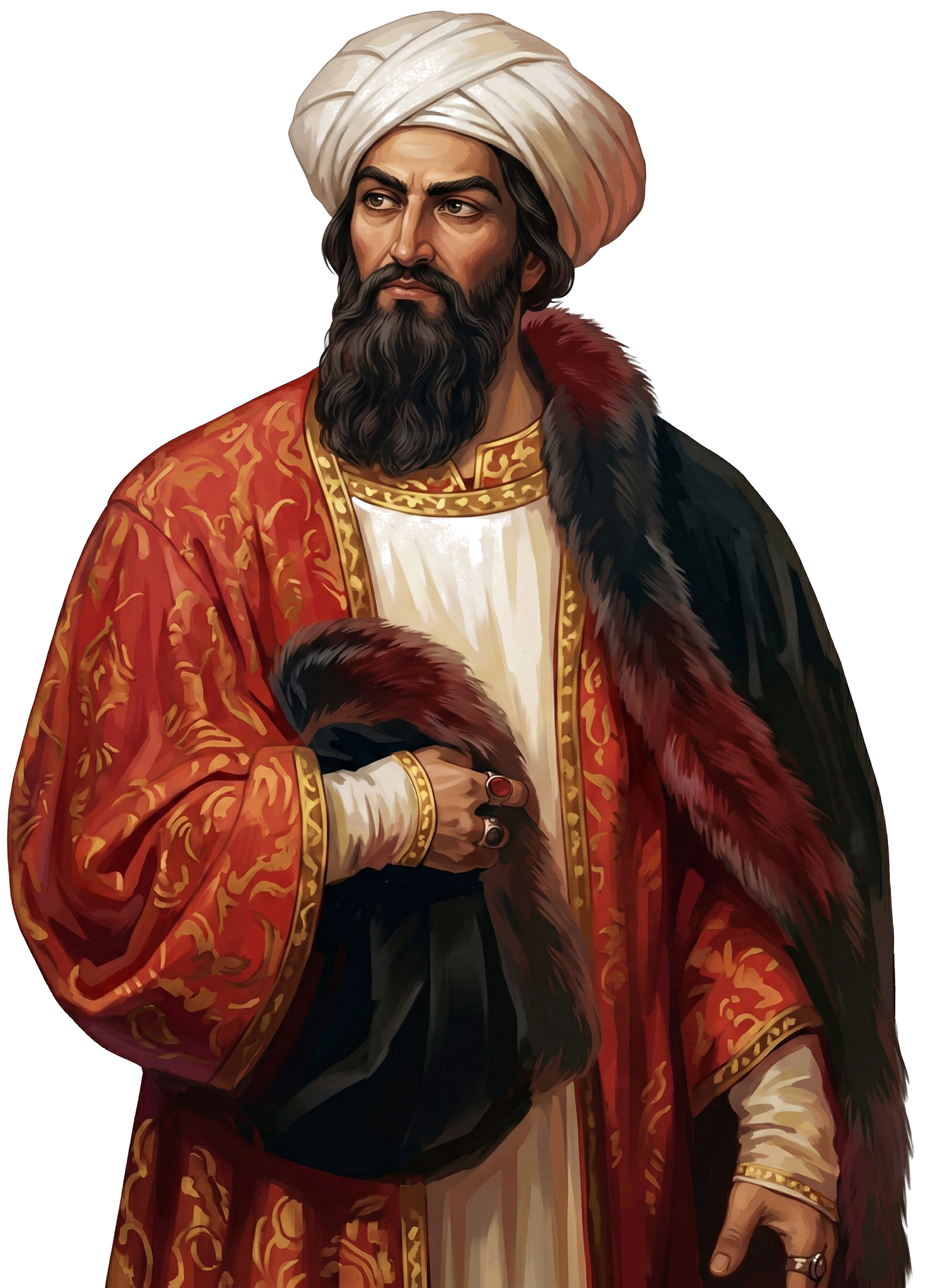
Gagik I was a prolific patron of sacred architecture, his most famous project being the Church of St. Gregory in Ani (1001–1010 AD), which was modeled after the legendary Zvartnots. His consort, Queen Katranide, sponsored the completion of the monumental Cathedral of Ani in 1001 AD, designed by the architect Trdat. During 20th-century excavations, a 2.26-meter statue of the king holding a model of his church was discovered, depicting him in a white turban and a red Arabic khalat—symbols of his formal recognition by the Abbasid Caliphate. Contemporaries described Gagik I as a man of handsome stature and dark hair, whose lips were like "red thread" and whose physical beauty matched the radiant city he built.
Royal Record
Family & Notes
Wife: Katranide. Children: Hovhannes-Smbat, Ashot IV. Notes: The peak of the Bagratid era;Ani became the "City of 1001 Churches"; completed the Ani Cathedral.
Wars & Battles
5 Conflicts: 1. Byzantine border wars; 2. Marwanid campaigns; 3. Internal suppression; 4. First Seljuk raids (1016); 5. Diplomatic containment.
War Record
3 Won, 1 Lost, 1 Draw
Territory Size
c. 200,000 km2km^2km2
Allied Rulers
Basil II (Byzantium)
“The legacy of Gagik I The Splendid endures through the centuries — a testament to the enduring spirit of the Armenian people and their unbroken pursuit of sovereignty, culture, and faith.”
Continue the Journey