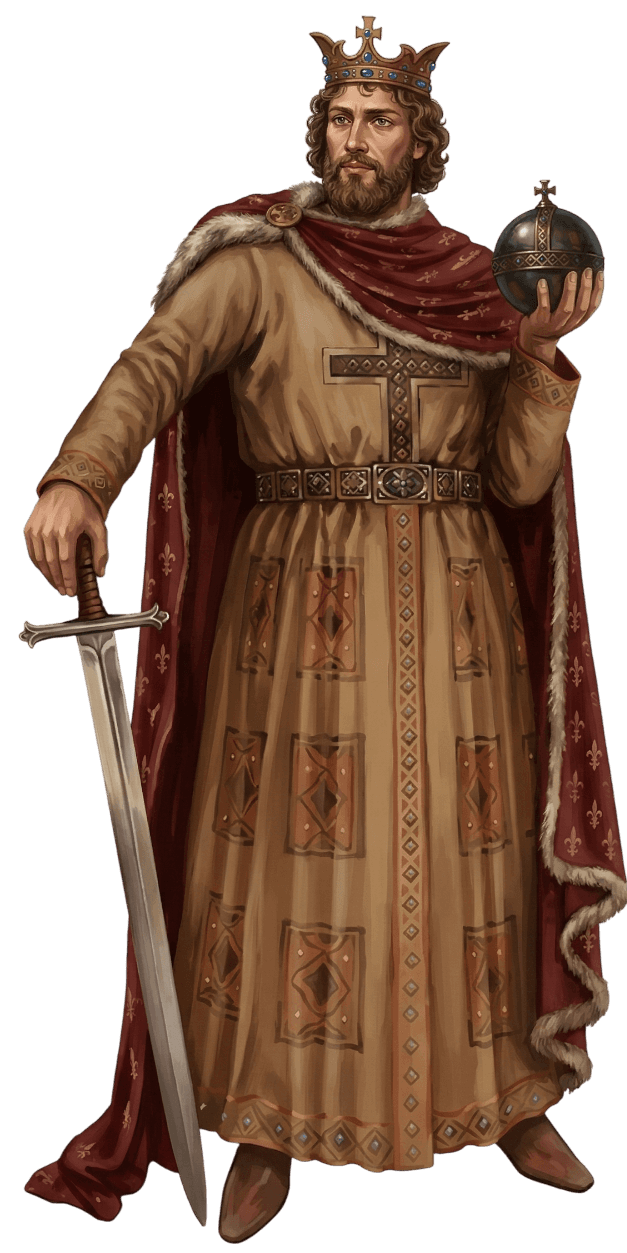
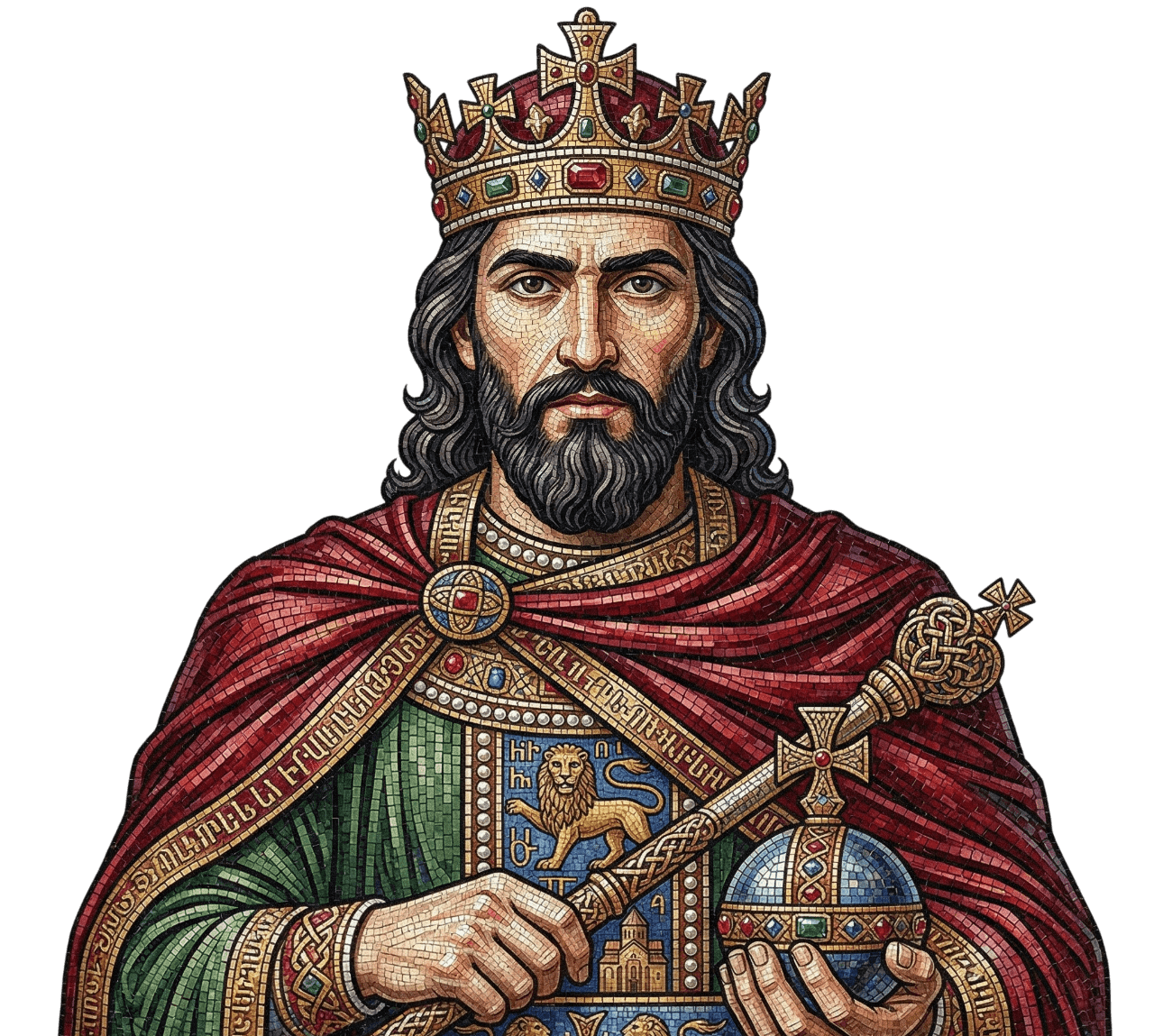
Hethum II
The Monk-King
Hethumid Dynasty — 1289–1293 AD 1295-1296 AD 1299-1301 AD
Armenian Kingdom of Cilicia
Hethum II reigned intermittently between 1289 and 1303 AD as the monarch of the Kingdom of Cilicia (Kilikia) and a prominent member of the Hethumid dynasty. The son of King Leo II and Queen Keran, his rule was defined by a precarious balancing act between the Mongol Empire, the Byzantine Empire, and the rising threat of the Mamluk Sultanate. A deeply religious man and a member of the Franciscan order, he abdicated twice during his life to take monastic vows, yet he remained the de facto "Grand Baron" and power behind the throne for nearly two decades. His reign saw significant military and territorial fluctuations, including the loss of the spiritual center of Hromgla to the Mamluks in 1292 and a later resurgence where he participated in the Mongol capture of Damascus. Despite surviving a brutal internal usurpation that left him partially blinded, Hethum II continued to lead the defense of the highlands until his death. He was treacherously assassinated alongside his nephew, King Leo III, by the Mongol general Bilarghu at Anazarbus in 1307, marking a tragic end to his career as both a monk and a monarch.
Hethum II took the throne in 1289 during an era of extreme geopolitical transition for the Kingdom of Cilicia (Kilikia). Following the death of his father, Leo II, the young king faced the aggressive expansion of the Mamluk Sultanate under Khalil. In 1292, the vital Armenian fortress of Hromgla fell after a 33-day siege, leading to the capture of 12,000 residents and the loss of major border cities including Marash and Behesni. A king more inclined toward spiritual life than the sword, Hethum abdicated for the first time in 1293 to enter a Franciscan monastery in Mamistra. Despite his withdrawal, he remained a key political figure, negotiating for the release of prisoners and the return of pillaged church relics while advocating for church reunification with Rome.
Fratricide and the Struggle for the Crown
The middle years of Hethum’s rule were marred by a violent dynastic struggle between the sons of Leo II. In 1295, Hethum was persuaded by his brother Thoros III to resume the throne to secure a renewed alliance with the Mongol Empire. However, while the two brothers were on a diplomatic mission to Constantinople in 1296 to arrange a marital alliance with the Byzantine Emperor Michael IX, their brother Sempad usurped the throne. Upon their return, Hethum and Thoros were captured and imprisoned in the fortress of Partzerpert, where Hethum was partially blinded and Thoros was murdered. It was not until 1299 that Hethum, having partially recovered from his blindness, ousted his usurping brothers and reclaimed the crown for his third and final reign.
The Syrian Campaigns and the Anazarbus Massacre
Hethum’s later years were defined by his military cooperation with the Mongol Ilkhan Ghazan. In 1299, he led Armenian forces to a major victory at the Battle of Wadi al-Khazandar (Battle of Homs), allowing him to temporarily reclaim all Armenian territories lost to the Mamluks. Tradition states that he visited Jerusalem in 1300, holding solemn Christian ceremonies in the Holy Sepulchre. Following the final Mongol retreat from Syria in 1303, Hethum abdicated once more in favor of his nephew, Leo III, but continued to serve as Regent. His life ended in a calculated betrayal; in 1307, the Mongol general Bilarghu summoned the Armenian leadership to a banquet at Anazarbus. While they were eating, Hethum, his nephew, and forty Armenian noblemen were massacred, a crime for which the general was later executed by the Ilkhan Öljaitü.
Royal Record
Family & Notes
Info: Celibate monk-king; abdicated 4 times. Murdered by a Mongol general who had converted to Islam.
Wars & Battles
5 Battles: 1. Battle of Homs (1299); 2. Mamluk raids; 3. Massacre of Anazarba (1293); 4. Murder at Anazarba.
War Record
1 Won / 3 Lost / 1 Draw
Territory Size
c. 60,000–70,000 km2km^2km2
Allied Rulers
Ghazan Khan (Mongol)
“The legacy of Hethum II The Monk-King endures through the centuries — a testament to the enduring spirit of the Armenian people and their unbroken pursuit of sovereignty, culture, and faith.”
Continue the Journey