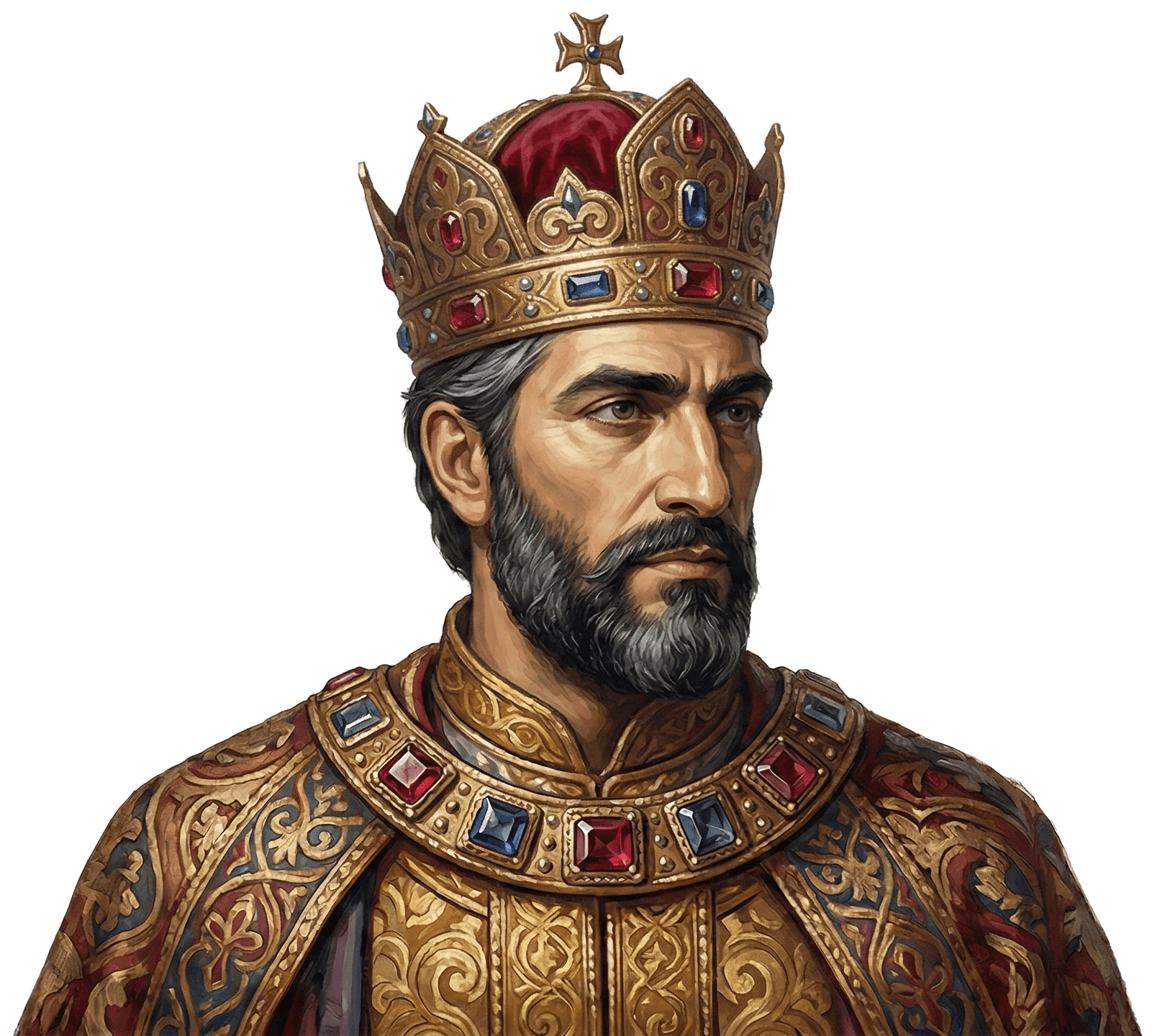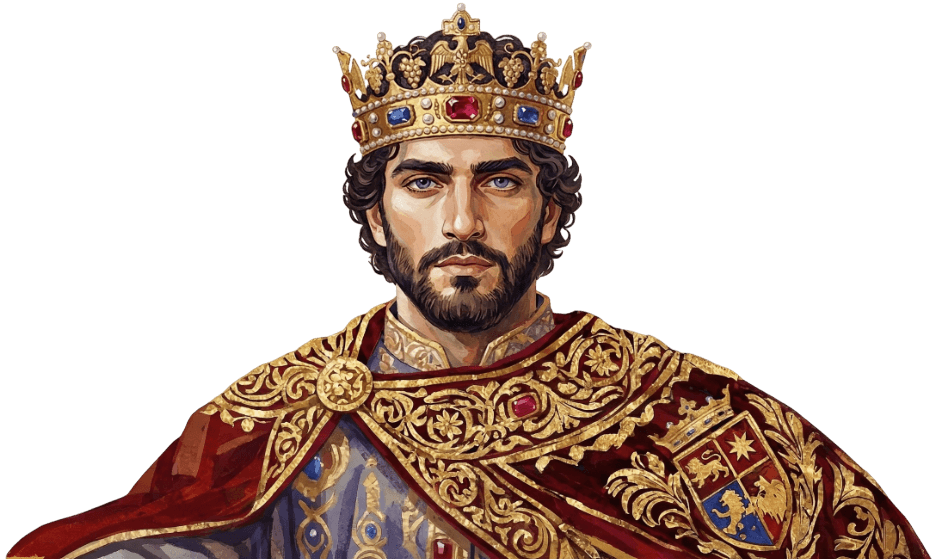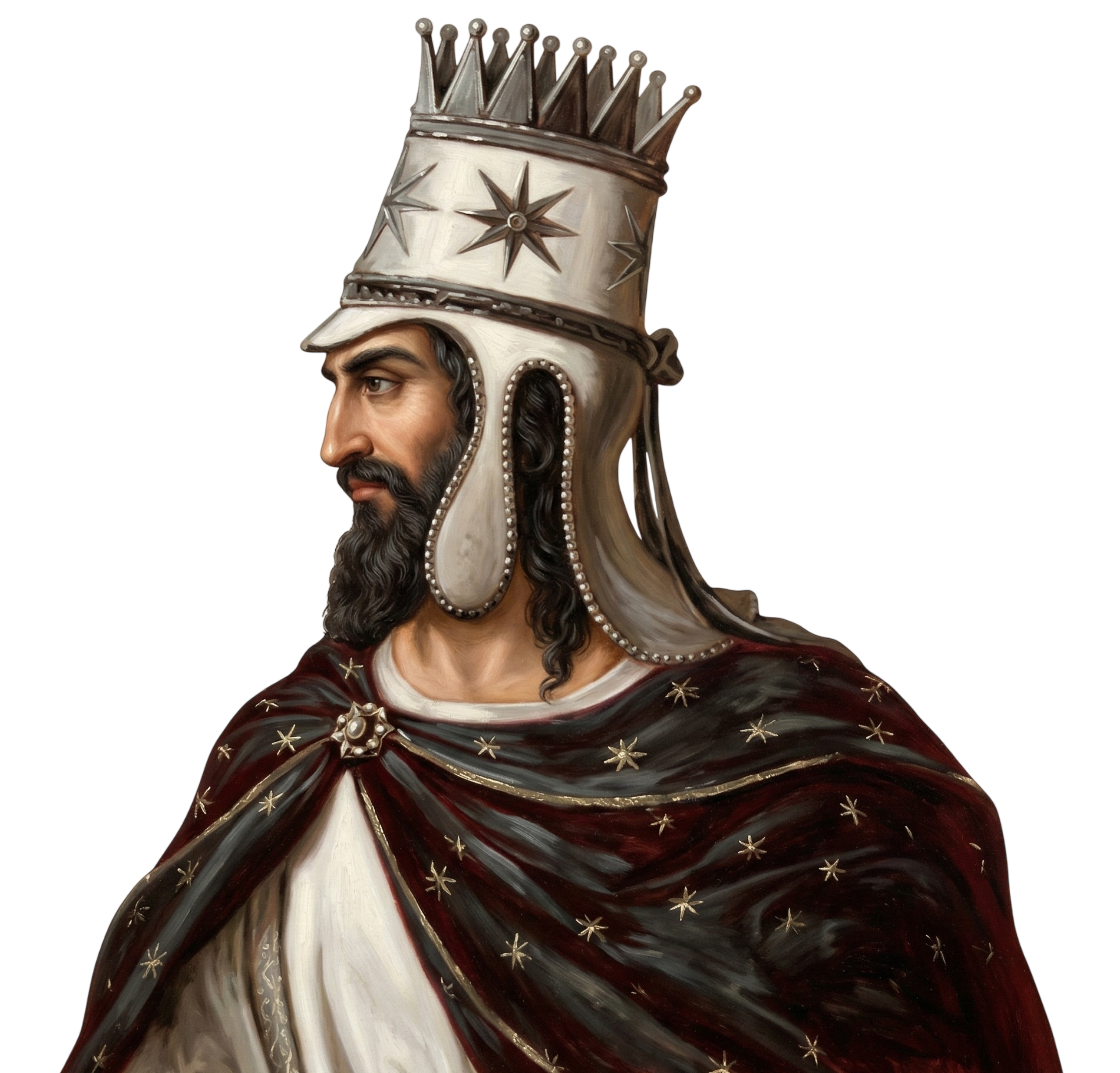
Sanatruces
Arsacid Dynasty — 88–110 AD
Arsacid Dynasty
Sanatruk reigned at the end of the 1st and start of the 2nd century as a member of the Arsacid dynasty, succeeding Tiridates I. He held a dual kingship, serving as the King of Armina (Armenia) and the King of Osroene, where he ruled from 91 to 109 AD. He is distinguished by the high praise of the historian Arrian, who equated his character with the most illustrious Greek and Roman leaders. In Armenian tradition, he is also known for his miraculous survival in a snowstorm as a child and for his role as a leader in the revolt against the Roman Emperor Trajan.
Sanatruk reigned during a pivotal transition for the Kingdom of Armina (Armenia) and Osroene. According to the historian Moses of Chorene, his life began with a miraculous survival in the Kordvats Mountains. While being carried from Edessa as a child, he was caught in a lethal three-day snowstorm. He survived the elements only because a white-coated animal—believed to be a dog—sheltered him and kept him warm. This event defined his identity, as his name "Sanatruk" etymologically signifies "Dog’s Gift," marking him as a figure preserved by destiny to lead the highlands. A Sovereign of Illustrious Merit As a monarch, Sanatruk commanded significant respect across the ancient world. In his work Parthica, the historian Arrian praised the Armenian king’s merits, placing him on the same level as the most celebrated figures of Greek and Roman history. However, this image of an enlightened ruler contrasts with Armenian hagiographic traditions. These religious accounts hold Sanatruk responsible for the martyrdom of the Apostles St. Thaddeus and St. Bartholomew within the highlands, as well as the execution of his own daughter, St. Sandukht the Virgin, following her conversion to Christianity.
Resistance Against the Roman Empire
The final chapter of Sanatruk’s leadership was defined by his defiance against the expansionist policies of Rome. By the time the Roman Emperor Trajan attempted to occupy the region, Sanatruk had become a central figure of the resistance. Though his successor Axidares held the throne by 110 AD, Sanatruk is recorded as a primary leader of the great revolt against Trajan's forces in 117 AD. Through his dual reign in Armenia and Mesopotamia, he maintained the sovereignty of the Arsacid line, proving to be a formidable opponent to the legions of Rome and an enduring icon of the Armenian royal tradition.
Royal Record
Family & Notes
Children: Axidares, Parthamasiris. Notes: Associated with the martyrdom of St. Sandukht; early Armenian church traditions trace roots to his reign.
Wars & Battles
1 War: Defended borders against Roman incursions under Domitian's governors.
War Record
1 Draw
Territory Size
c. 300,000 km2km^2km2
Allied Rulers
Pacorus II (Parthia)
“The legacy of Sanatruces endures through the centuries — a testament to the enduring spirit of the Armenian people and their unbroken pursuit of sovereignty, culture, and faith.”
Continue the Journey