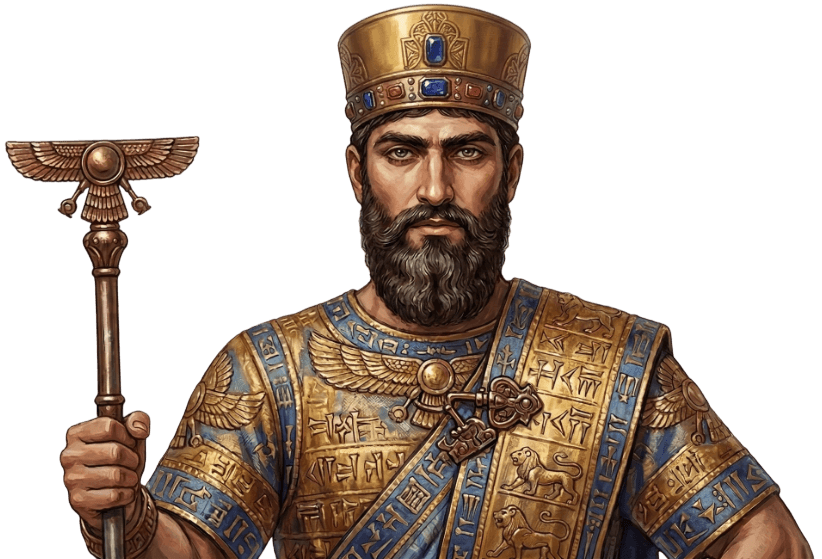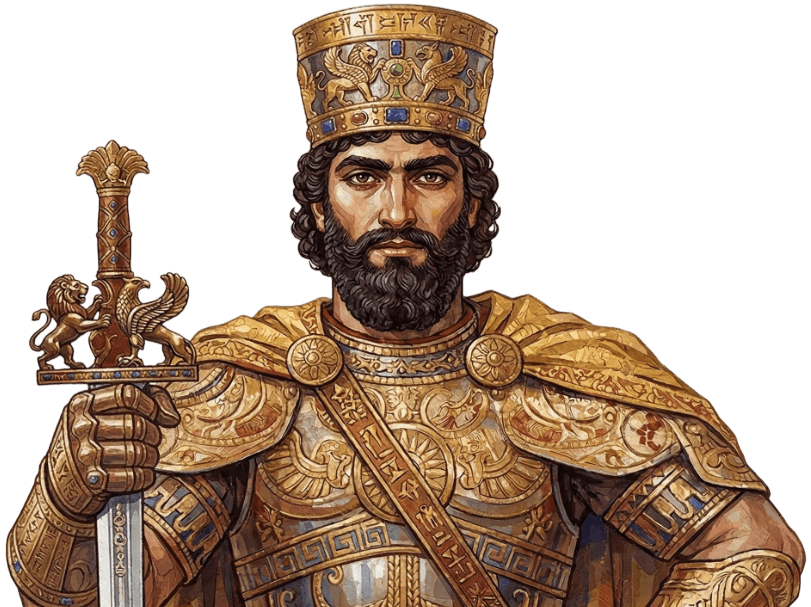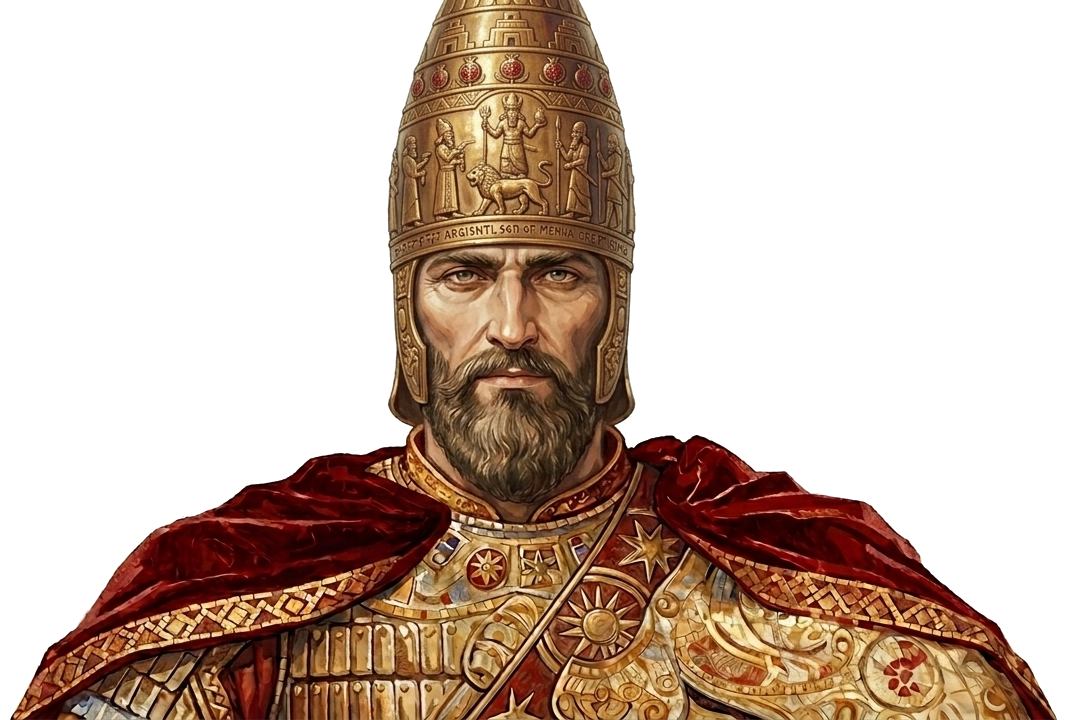
Argishti I
Founder of Erebuni
Araratian Dynasty — 786–764 BC
Kingdom of Urartu
Argishti I reigned from 786 to 764 BC as the sixth monarch of the Kingdom of Ararat (Urartu), leading the state to the absolute pinnacle of its military and political power. The son and successor of Menua, he conducted near-annual military campaigns that expanded the kingdom's reach from the shores of Lake Sevan and the Ararat Valley (Yerevan) to the northern regions of Syria and even reaching the Persian Gulf. He is most famously known for founding the citadel of Erebuni (Yerevan) in 782 BC and the administrative center of Argishtihinili (Armavir) in 776 BC. His reign is documented in unparalleled detail through the Khorkhorian Annals, a monumental cuneiform inscription on the Van Rock consisting of nearly 380 to 500 lines. By successfully blockading Assyria's access to raw materials and establishing a vast network of fortified cities, Argishti I transformed his realm into the dominant superpower of the ancient Near East before being succeeded by his son, Sarduri II.
Argishti I reigned between 786 and 764 BC, a period during which the Kingdom of Ararat (Urartu) reached its geographical and political zenith. Following the expansionist legacy of his father Menua, Argishti campaigned every year of his reign, successfully neutralizing the Assyrian threat by encircling their empire from the north, east, and south. In 785 BC, he reclaimed the metal-rich regions of Diauehi (Tayk) and later pushed into the Zabakha (Javakhk) region. To the west, his conquest of Melitea (Malatya) and Tabal (Tobel) effectively cut off Assyrian access to the primary resource sources of Asia Minor. By 781 BC, after defeating Assyrian forces in the field, he extended Urartian influence through the Zagros Mountains into Babylonia (Babilu), reaching as far as the Persian Gulf.
Foundations of Statehood and Administration
Beyond his conquests, Argishti I was a prolific builder who restructured the Armenian Highlands with permanent administrative and military hubs. In 782 BC, he established the fortress of Erebuni (Yerevan) on the Arin-Berd hill, settling it with 6,600 prisoners of war from the lands of Hatti and Supani (Tsopk). This citadel was built to demonstrate the "might of Biainili" and to pacify hostile territories. In 776 BC, he founded Argishtihinili (Armavir) on the left bank of the Araks River, which became a vital administrative center equipped with palaces, temples, barracks, and extensive vineyards and orchards. These urban centers secured the northern provinces and allowed for the development of stable agriculture through new irrigation canals.
The Khorkhorian Chronicles and Historical Record
The historical memory of Argishti I is preserved primarily through the Khorkhorian Annals, carved into the Van Rock. These inscriptions, exceeding 380 lines, are among the longest cuneiform records of the ancient world, comparable in scale to the records of the Egyptians and Persians. These records detail his annual victories and the massive amounts of tribute and captives brought back to the heartland. Through these inscriptions, Argishti proclaimed his authority and established a legacy of world power. In addition to the rock inscriptions, steles like the one found in Bitlis (Ahlat Museum) and inscriptions at Kepenek Castle (Muş) further verify his extensive reach across the highlands.
Royal Record
Family & Notes
Father: Menua. Wives: Bagena, Hasis (unattested). Founded Erebuni (Yerevan) in 782 BC.
Wars & Battles
1 recorded war (Hatti/Dsopk campaigns). Multiple vs. Assyria/Urartu neighbors (e.g., Hatti).
War Record
1 Won, 0 Lost. Several Won.
Territory Size
Peak regional dominance ~400,000 km²
“By the greatness of the god Khaldi, Argishti, son of Menua, built this mighty fortress and named it Erebuni—for the power of the land and the terror of its enemies.”
Continue the Journey