Ashot II
The Iron
Bagratuni Dynasty — 914–929 AD
Bagratid Kingdom
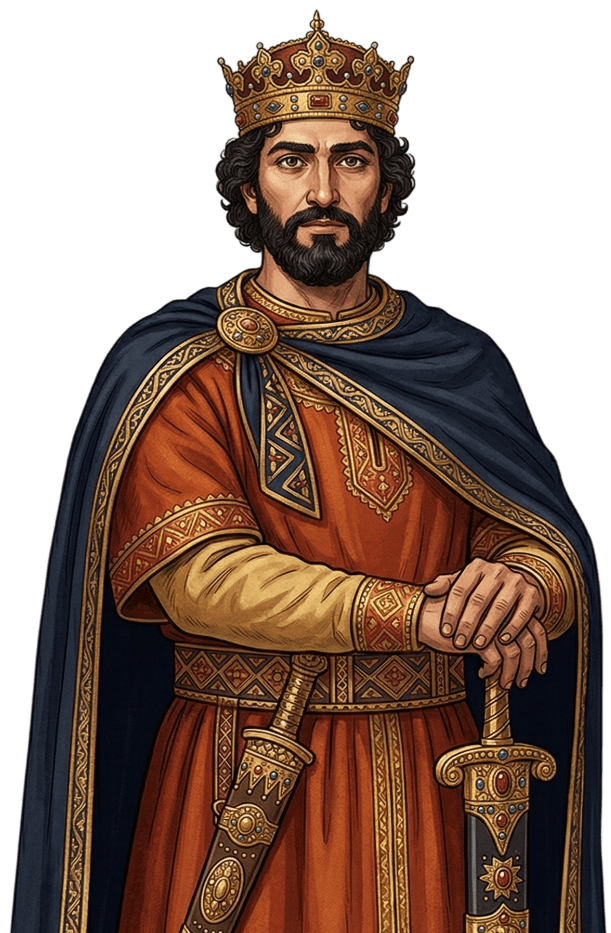
Ashot II reigned from 914 to 929 AD as the monarch of the Kingdom of Armenia (Bagratid Armenia), succeeding his father, Smbat I. His reign began during an era of deep crisis, as the Arab Emir Yusuf had executed his father and installed a rival "anti-king" in Dvin. Ashot II successfully navigated this turmoil, securing military aid from the Byzantine Empress Zoe to restore his authority across the highlands. Known by the epithet "Yerkat" (the Iron) for his success in crushing foreign invasions and domestic rebellions, he transformed the kingdom into a stabilized regional power. By 922 AD, he was recognized as the "Shahanshah" (King of Kings) by the Abbasid Caliphate, signifying his supremacy over the Armenian princes. He died without an heir in 929 AD, passing the throne to his brother, Abas I.
Ashot II reigned between 914 and 929 AD, taking power at a moment when the Kingdom of Armenia (Bagratid Armenia) was fractured by Arab occupation and civil war. Following the torture and beheading of his father by the Emir Yusuf, the highlands were plagued by pretenders to the throne, including Ashot's own cousin who was installed as an "anti-king" in Dvin. To reclaim his heritage, Ashot II traveled to Constantinople, where he secured a Byzantine alliance with Empress Zoe. This intervention allowed him to entering Taron and push back the Arab forces, eventually forcing the rival pretender to concede defeat by 920 AD. His ability to survive these onslaughts earned him the enduring epithet of "the Iron."
International Diplomacy and Military Victories
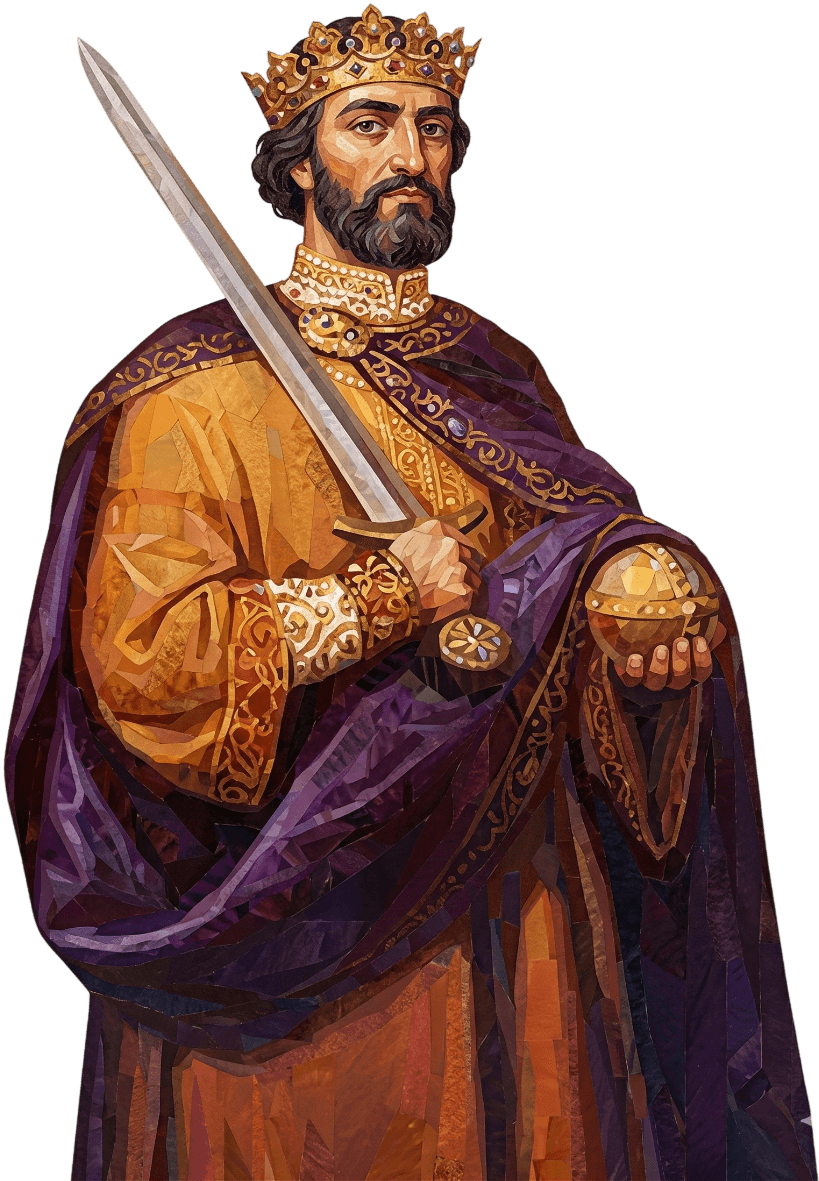
The middle years of Ashot II’s reign were defined by a sophisticated balance of power between the Byzantine Empire and the Abbasid Caliphate. In 922 AD, his dominance was formally acknowledged when the Caliph in Baghdad recognized him as the ruler of Armenia and the Arab governor Subuk granted him the title of Shahanshah (King of Kings). This status as a supreme monarch created friction with the Byzantines, who attempted to support rebels against him. However, Ashot II demonstrated his martial superiority through repeated victories, most notably routing a Muslim army near Lake Sevan and successfully defending the approaches to Dvin. By the end of his reign, even the Byzantine Emperor Romanos I was forced to focus elsewhere, leaving Ashot II as the undisputed master of his domain.
The Legacy of the Iron Cross
The personal discipline of Ashot II was reflected in his internal administration, where he maintained order through decisive actions, such as blinding his father-in-law, Sahak Sevada, after a failed revolt. Though his fifteen-year reign was a period of near-constant warfare, he successfully preserved the kingdom’s sovereignty and administrative integrity. Dying without a son in 929 AD, he left a legacy that remains a cornerstone of Armenian military identity. In the modern era, the battle cross he carried is venerated as the "Guardian of the Armenian Army," and his royal flag is used as a symbol of national independence, honoring the king whose unwavering will served as the shield of the highlands.
Royal Record
Family & Notes
Sibling: Abas I. Notes: Earned his nickname for his military toughness; famously conducted a guerrilla war to expel the Arabs and restore order.
Wars & Battles
7 Battles: 1. Guerrilla war (914-919); 2. Siege of Dvin; 3. Battle of the Araxes; 4. Capture of Yusuf ibn Abi'l-Saj; 5. Rebel suppression.
War Record
5 Won, 1 Lost, 1 Draw
Territory Size
c. 100,000–160,000 km2km^2km2
Allied Rulers
Constantine VII (Byzantium)
“The legacy of Ashot II The Iron endures through the centuries — a testament to the enduring spirit of the Armenian people and their unbroken pursuit of sovereignty, culture, and faith.”
Continue the Journey