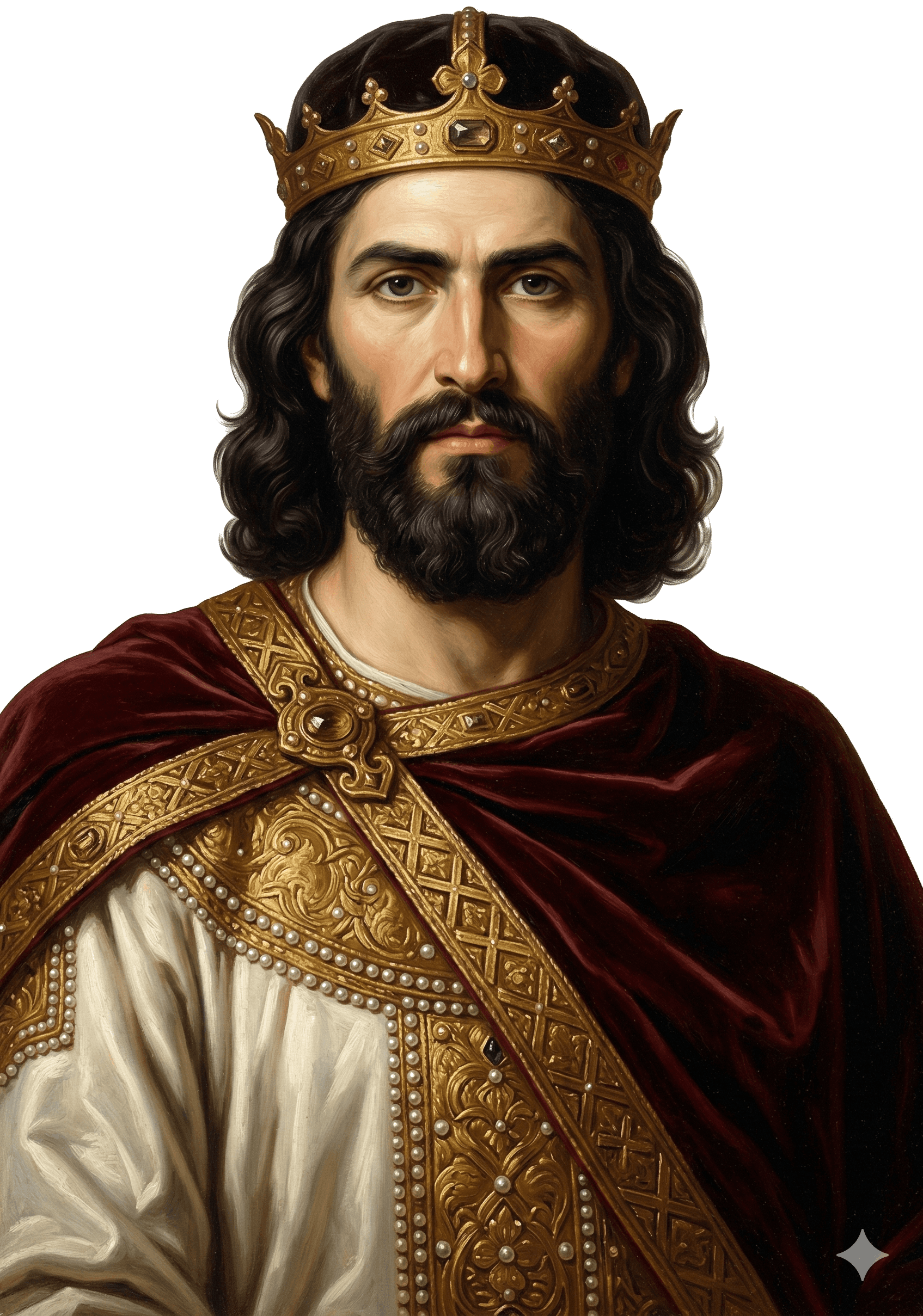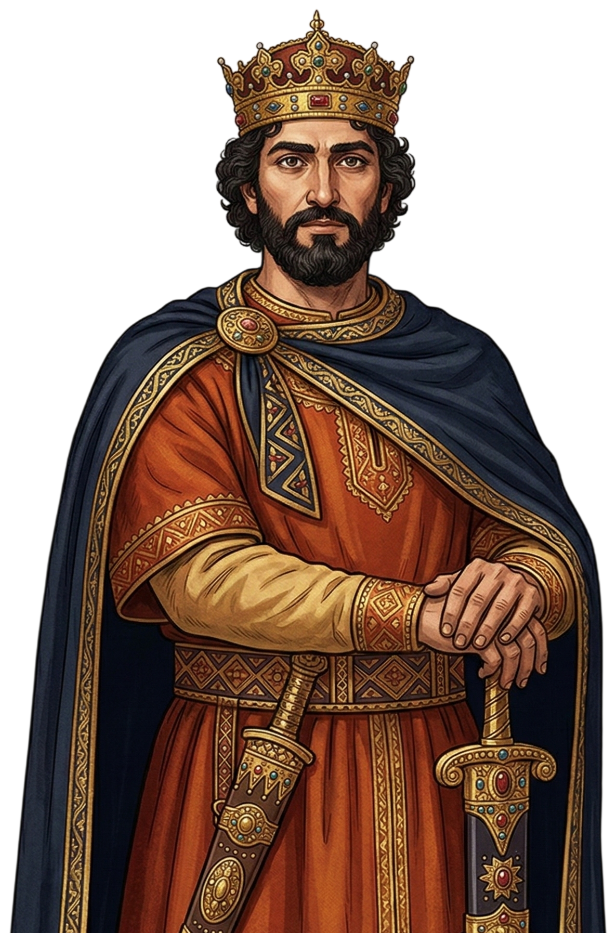
Smbat I
The Martyr
Bagratuni Dynasty — 890–914 AD
Bagratid Kingdom
Smbat I reigned from 892 to 914 AD as the second monarch of the Bagratid Kingdom of Armenia (Bagratid Armenia), succeeding his father, Ashot I. Crowned in Yerazgavors (Shirakavan), his early rule was marked by significant military and diplomatic achievements, including the recapture of the former capital Dvin in 892 AD and the maintenance of a delicate balance between the Byzantine Empire and the Arab Caliphate. The latter half of his reign was consumed by brutal warfare against the Arab ostikans of the Sajid dynasty and internal divisions among the Armenian nobility. After ceding Nakhichevan to his allies in Syunik, he inadvertently triggered a feud with Gagik I Artsruni, who established a rival kingdom in Vaspurakan with Arab support. Following a long siege at Berd Kapoyt, Smbat I surrendered to spare his kingdom further destruction but was subsequently tortured and beheaded. Known as "Smbat the Martyr," his sacrifice and execution in Dvin became a powerful symbol of national resilience.
Smbat I reigned between 892 and 914 AD, assuming the crown during a period of precarious sovereignty for the Kingdom of Armenia (Bagratid Armenia). Despite an early succession challenge from his uncle Abas, Smbat successfully stabilized his rule and pursued a sophisticated foreign policy. He was a master of economic diplomacy, convincing the Arab ostikan Afshin that a strong Armeno-Byzantine alliance would foster regional trade to the Arabs' benefit. His greatest early triumph occurred on April 21, 892 AD, when he successfully recaptured the city of Dvin, the ancestral heart of Armenian administration. Supported by his northern neighbor, Adarnase IV of Iberia, Smbat I positioned the highlands as a revitalized center of political and economic power.
The Fragmentation of the Noble Houses
The prosperity of Smbat’s reign was eventually undermined by the aggressive ambitions of the Sajid governors and tactical errors in managing the nakharar (noble) class. A significant turning point occurred when Smbat ceded the city of Nakhichevan to the house of Syunik; this decision deeply alienated Gagik I Artsruni of Vaspurakan, who claimed the territory as his own. The Arab ostikan Yusuf ibn Abi'l-Saj exploited this internal rift by crowning Gagik as a rival king in 908 AD, effectively fracturing the unified Armenian state. As Yusuf launched a devastating campaign in 909 AD, Smbat found himself increasingly isolated, as many Armenian princes withheld their support and his close relatives were systematically eliminated by the invading forces.
The Siege of Berd Kapoyt and the Martyr’s Legacy
The final years of Smbat I’s life were a period of immense tragedy. As Yusuf’s army ravaged the highlands, the king took refuge in the impregnable Berd Kapoyt (Blue Fortress). In 914 AD, following a protracted siege, Smbat chose to surrender himself in a selfless attempt to end the slaughter of his subjects. Yusuf showed no mercy, taking the king to Yernjak where he was subjected to brutal torture and beheading. His body was displayed on a crucifix in Dvin, which contemporary historian Hovhannes Draskhanakerttsi records became a site of pilgrimage for Christians and non-Christians alike. Eventually interred at the monastery of Artsvanist, Smbat I is remembered as "the Martyr," a monarch whose death solidified the spiritual and national identity of the Bagratuni era.
Royal Record
Family & Notes
Child: Ashot II. Notes: A tragic figure; fought a long war against the Sajid emirs; was eventually captured and crucified for his faith.
Wars & Battles
6 Wars: 1. Sajid Wars; 2. Arab border raids; 3. Georgian Coalition; 4. Battle of Akhurian (908); 5. Siege of Tigranakert; 6. Final capture.
War Record
2 Won, 3 Lost, 1 Draw
Territory Size
c. 100,000–150,000 km2km^2km2
Allied Rulers
Leo VI (Byzantium), Abkhazian Kings
“The legacy of Smbat I The Martyr endures through the centuries — a testament to the enduring spirit of the Armenian people and their unbroken pursuit of sovereignty, culture, and faith.”
Continue the Journey