Ashot I
The Brave
Bagratuni Dynasty — 885–890 AD
Bagratid Kingdom
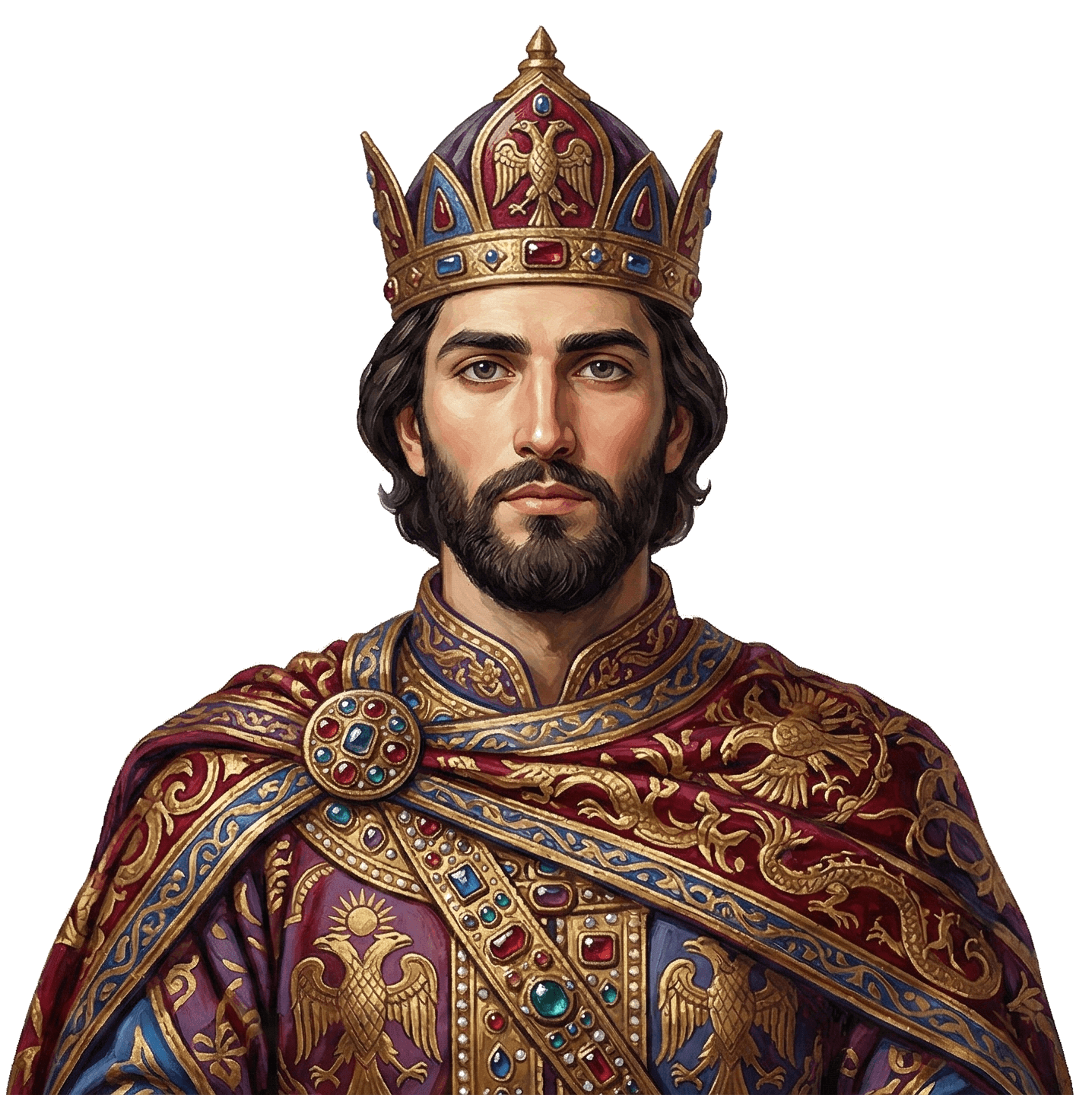
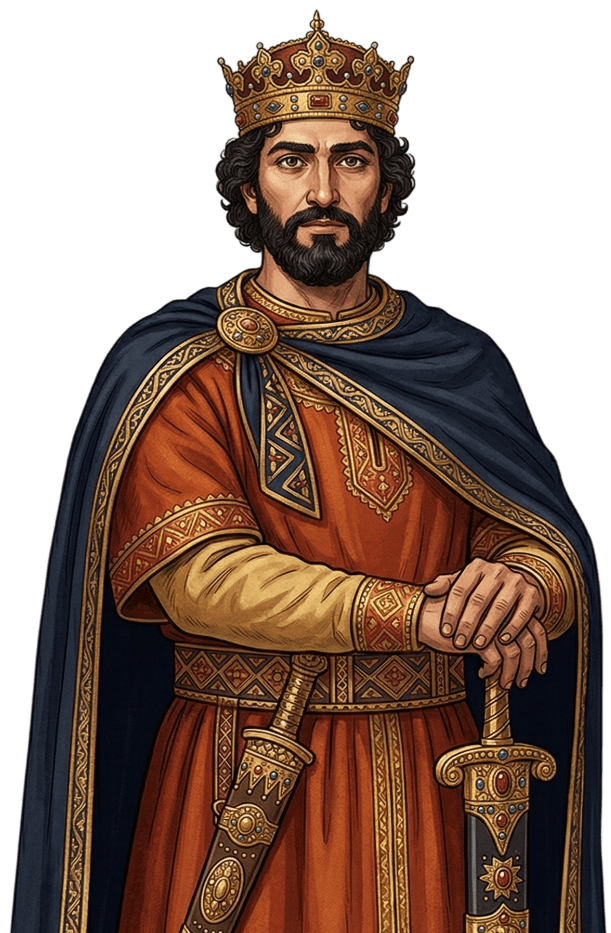
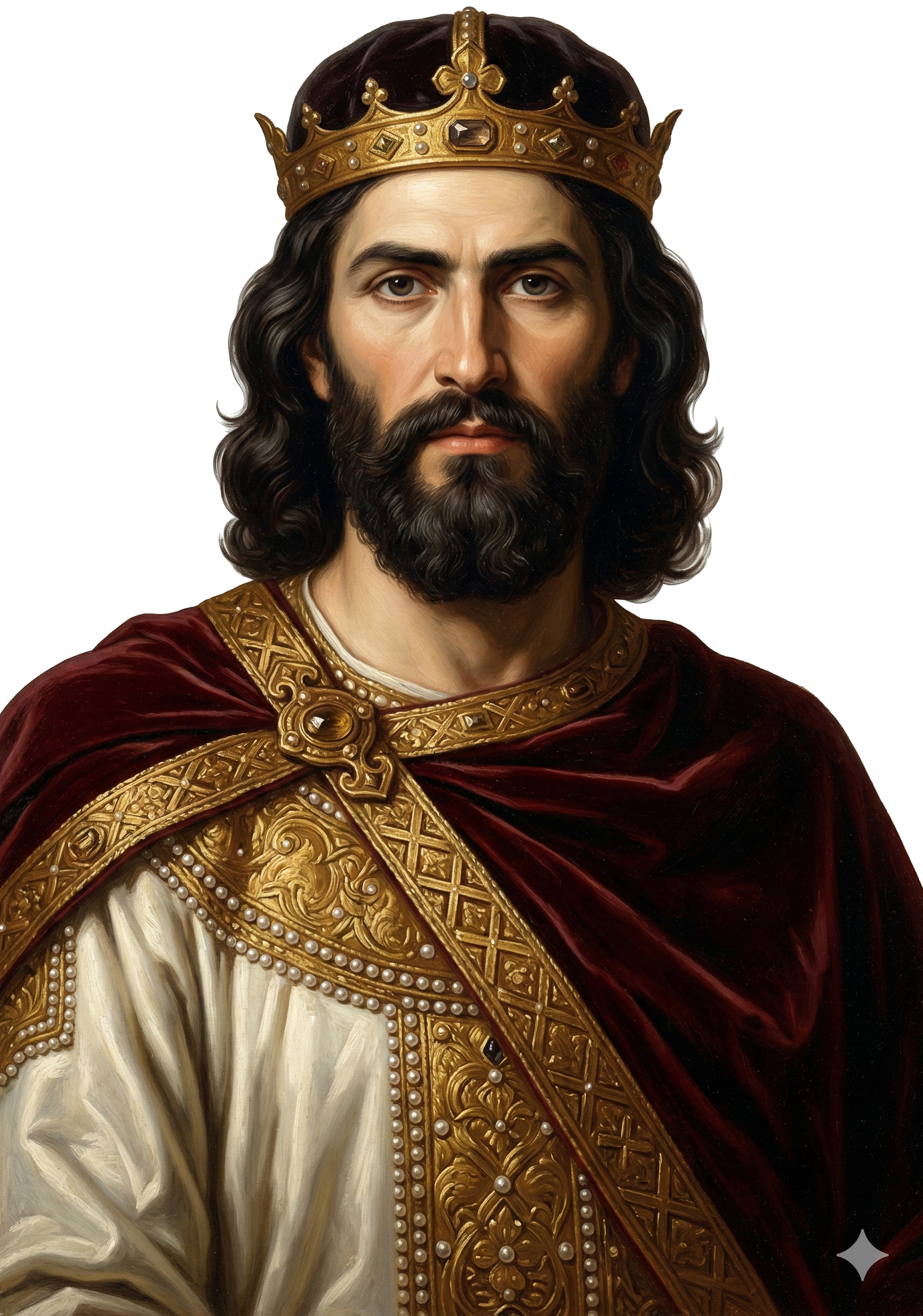
Ashot I reigned from 885 to 890 AD as the founder of the Bagratid dynasty and the restorer of the medieval Kingdom of Armenia (Bagratid Armenia). The son of Smbat VIII the Confessor, he previously served as the sparapet (supreme commander) and was recognized as the "Prince of Princes" in 862 AD. His coronation marked the end of centuries of direct foreign rule and the beginning of Armenia's second golden age. His reign was defined by the unification of the Armenian noble houses and the establishment of a centralized state that maintained a delicate balance between the Abbasid Caliphate and the Byzantine Empire. Under his leadership, the kingdom experienced a significant revival in arts, urban growth, and agriculture. He established the royal residence at Bagaran, where he was eventually buried following his death in 890 AD.
Ashot I, born around 820 AD into the powerful Bagratuni house, emerged as a unifying leader during the height of the Arab-Byzantine wars. After his father was exiled to Samarra, Ashot was named sparapet in 856 AD. His military and diplomatic skill, showcased at the Battle of Karasounk, led the Abbasid Caliph to recognize him as the "Prince of Princes of Armenia, Georgia, and the Caucasus" in 862 AD. To secure internal stability, Ashot utilized strategic familial alliances, marrying his daughters into the Artsruni and Siunia dynasties. These ties allowed him to consolidate power over the Armenian Highlands and successfully wage war against local emirs, effectively becoming the de facto ruler of the region decades before his formal coronation.
The Restoration of the Monarchy
The formal return of Armenian sovereignty occurred in 885 AD, when Ashot was crowned King of Armenia with the consent of Caliph al-Mu'tamid. This move was a strategic maneuver to prevent the Byzantine Emperor Basil I from annexing Armenian territories. As the first king of the Kingdom of Armenia (Bagratid Armenia), Ashot acted as a primus inter pares among the highland princes, bringing the emirates of Manazkert, Dvin, and Karin under his authority. He was also a staunch defender of the Armenian Apostolic Church; when the Patriarch of Constantinople attempted to merge the Armenian and Byzantine churches, Ashot formulated an ambiguous response during a council at Yerazgavors to preserve Armenian religious independence. A Second Golden Age The reign of Ashot I oversaw the beginning of a cultural and economic renaissance that lasted for over a century. His administration encouraged urban growth and the flourishing of agriculture, particularly the vineyard industry. Ashot and his wife, Katranide, were significant patrons of the arts; in 879 AD, the first recorded khachkar (cross-stone) was created as a tribute to the queen. Religious architecture also thrived under his patronage, exemplified by the founding of the Sevanavank Monastery by his daughter, Mariam. Upon his death in 890 AD, Ashot was buried with royal honors in the cemetery of his ancestors at Bagaran, leaving behind a revitalized and sovereign nation for his son, Smbat I.
Royal Record
Family & Notes
Child: Smbat I. Notes: Restored the monarchy after 450 years; gained dual recognition from both the Arab Caliphate and the Byzantine Empire.
Wars & Battles
5 Conflicts: 1. Anti-Arab campaigns; 2. Sajid War; 3. Separatist suppression; 4. Battle vs Kaysites; 5. Border defense.
War Record
4 Won, 1 Draw
Territory Size
c. 100,000–150,000 km2km^2km2
Allied Rulers
Basil I (Byzantium), Caliph Al-Mu'tamid
“The legacy of Ashot I The Brave endures through the centuries — a testament to the enduring spirit of the Armenian people and their unbroken pursuit of sovereignty, culture, and faith.”
Continue the Journey