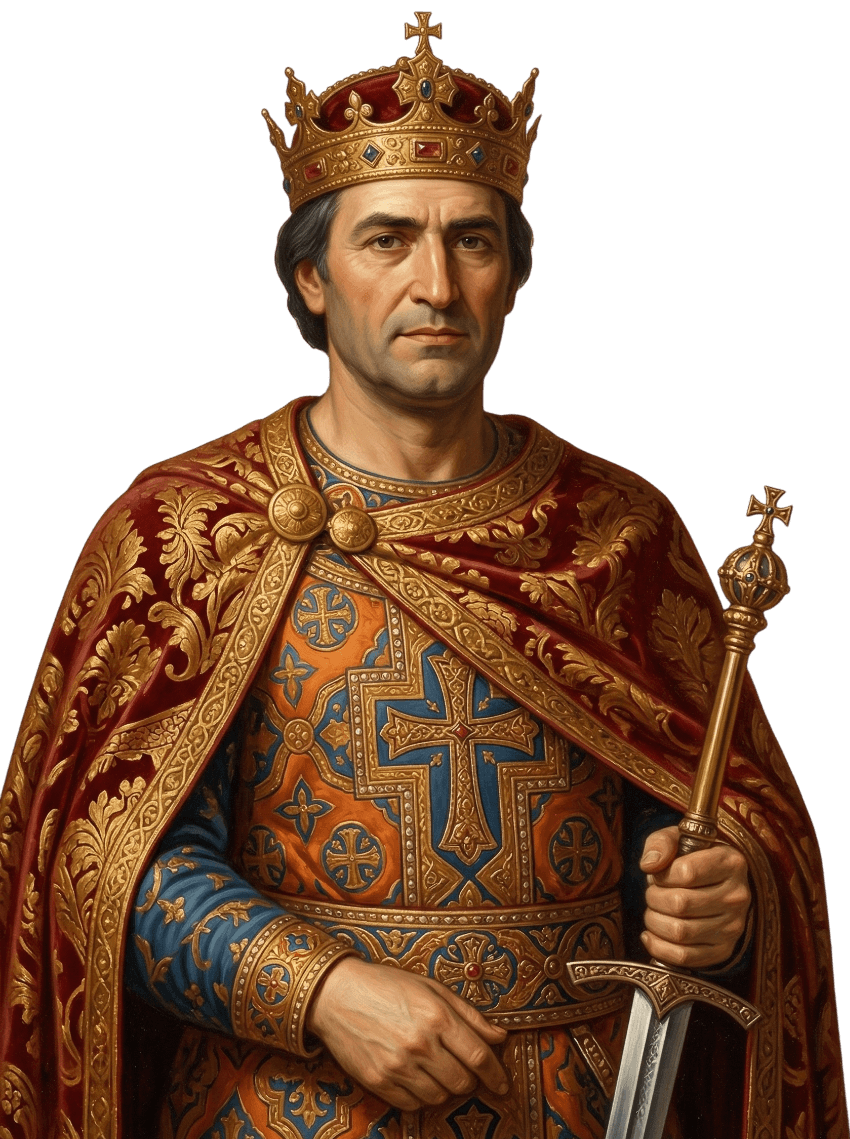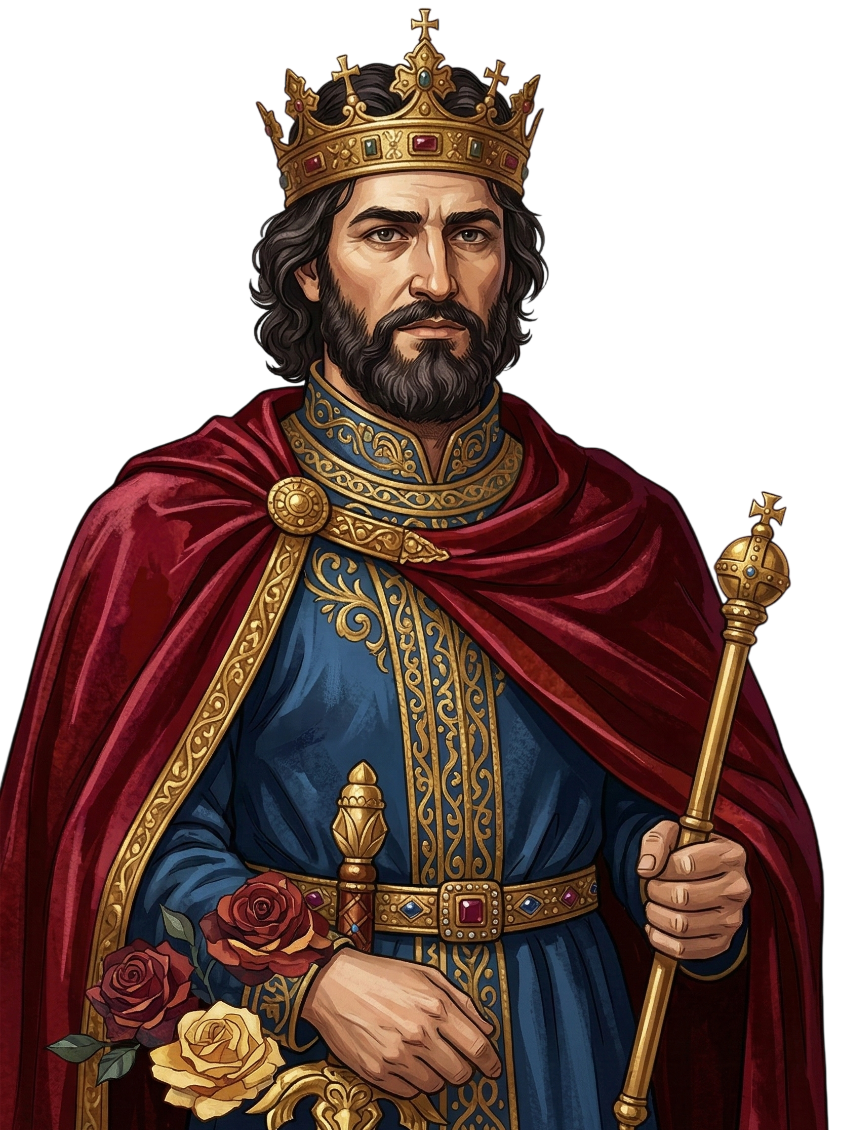
Leo IV
Last Hethumid
Hethumid Dynasty — 1320–1342 AD
Armenian Kingdom of Cilicia
Leo IV reigned from 1320 to 1341 AD as the final Hethumid monarch of the Kingdom of Cilicia (Kilikia). The son of King Oshin I and Queen Isabel of Korikos, he ascended the throne as a ten-year-old minor under the regency of his uncle, Oshin of Korikos. His early reign was defined by the regent’s attempts to consolidate power, which included forcing the young king into a marriage with the regent’s daughter, Alice. Upon reaching his majority in 1329 AD, Leo IV reclaimed his sovereignty through a violent purge, ordering the execution of his regent, his wife, and several high officials. His administration was characterized by a controversial pro-Western policy and the pursuit of a union between the Armenian and Roman Churches, a stance that deeply alienated the native Armenian barons. Following the loss of the strategic port of Ayas to the Mamluks, he was murdered by his own nobility in the citadel of Sis, bringing a definitive end to the Hethumid dynasty.
Leo IV reigned between 1320 and 1341 AD, taking power during an era where the Kingdom of Cilicia (Kilikia) was plagued by both external aggression and internal corruption. During his minority, the regent Oshin of Korikos held absolute control, forcing Leo into a political marriage and murdering other members of the royal family to secure his own position. In 1329 AD, Leo IV responded with a brutal military purge to end the regency. He ordered the murder of Oshin, the Constable Constantine, and even his own wife, Alice. To signal his new authority to the world, he sent the regent’s severed head to the Mongol Il-Khan and Constantine’s head to the Mamluk Sultan Al-Nasir Muhammad, signaling a violent transition to his sole rule.
The Western Policy and Religious Friction
The core of Leo IV’s foreign policy was a staunchly pro-Western and "Latinophile" orientation. Believing that a new European crusade was the only solution to the Mamluk threat, he advocated for the unification of the Armenian and Roman Churches. This religious pivot, further emphasized by his 1331 AD marriage to Constance of Sicily, was met with fierce opposition from the native Armenian clergy and barons. The conflict between the "Unitarian" and "Anti-Unitarian" factions sharpened, weakening the internal stability of the highlands while promised military aid from the Pope and the West failed to materialize. His policy eventually led him to grant high state offices to Latin officials, further distancing the crown from its Armenian base.
The Fall of the Hethumids
The final years of Leo IV’s reign were marked by military failure and strategic isolation. In 1337 AD, the Mamluk Sultan launched a successful invasion, capturing the strategic harbor of Ayas. Leo was forced to conclude a humiliating truce, surrendering significant territories and promising to cease all diplomatic relations with the West. Strategically paralyzed, the king spent his remaining years holed up within the citadel of Sis. On August 28, 1341 AD, the deep-seated resentment of the Armenian nobility culminated in his assassination. As his only son, Hethum, had died years earlier, the murder of Leo IV marked the functional extinction of the Hethumid royal line, and the throne was subsequently passed to the House of Lusignan.
Royal Record
Family & Notes
Wife: Constance of Aragon. Notes: Last of the Hethumid line; struggled to find help from Europe as the Mamluks tightened their grip.
Wars & Battles
4 Battles: 1. Mamluk Invasions; 2. War with Cyprus; 3. Defense of Sis; 4. Assassination.
War Record
1 Won / 2 Lost / 1 Draw
Territory Size
c. 40,000–50,000 km2km^2km2
Allied Rulers
Philip VI (France)
“The legacy of Leo IV Last Hethumid endures through the centuries — a testament to the enduring spirit of the Armenian people and their unbroken pursuit of sovereignty, culture, and faith.”
Continue the Journey