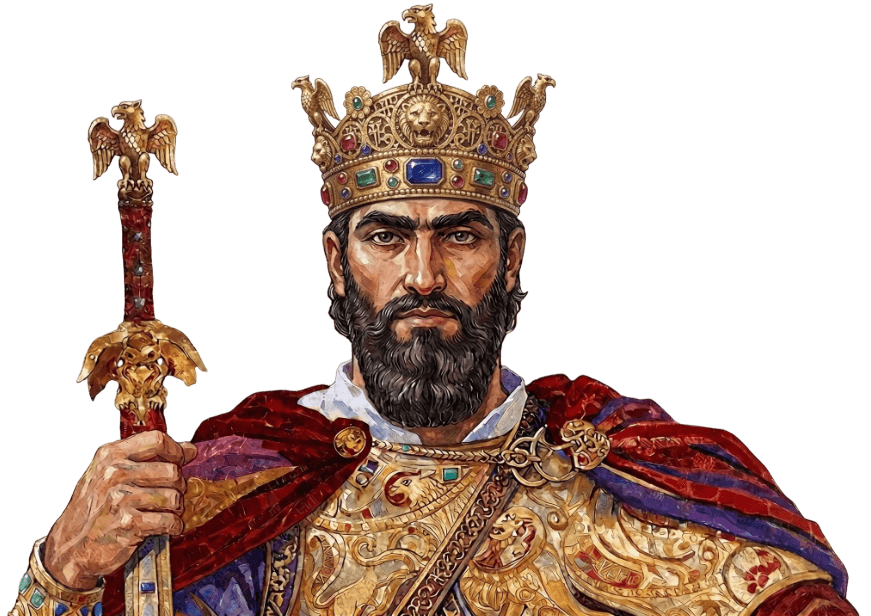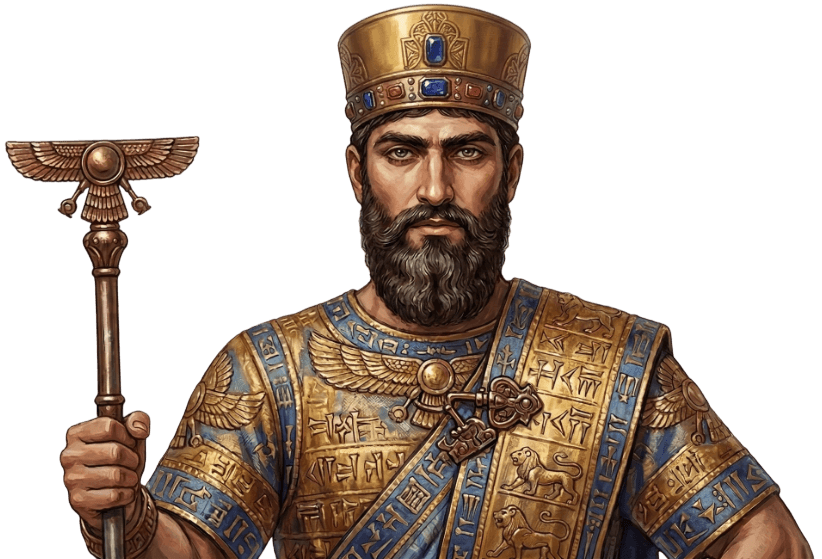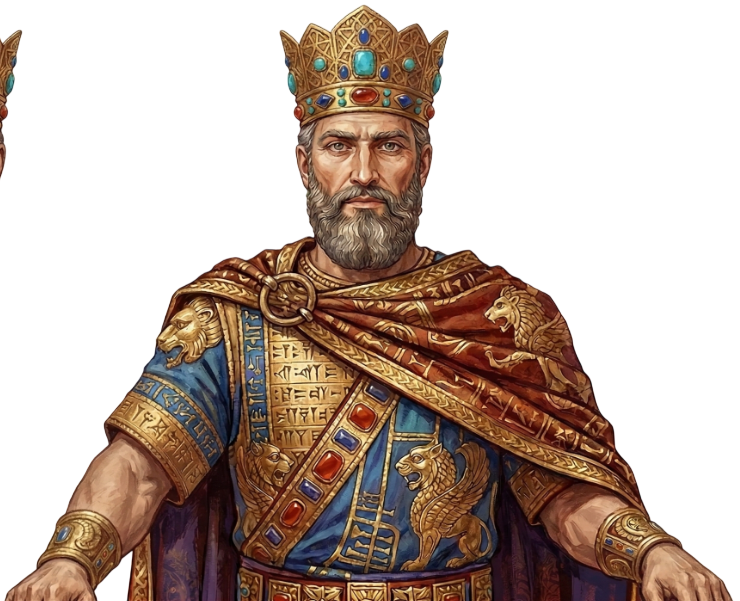
Menua
Araratian Dynasty — 810–786 BC
Kingdom of Urartu
Menua reigned from 810 to 786 BC as the fifth known monarch of the Kingdom of Ararat (Urartu). The son of Ishpuini, he first served as co-regent before ascending to a sole reign that transformed the kingdom into a near-peer empire to Assyria. Menua is historically distinguished by his extensive administrative reforms and a massive building program, earning him the title of "Shinarar" (Builder). He founded several strategically vital cities, including Menuakhinili (Iğdır) near the Araks River and Manazkert (Malazgirt), while expanding the state's borders from the basin of the Chorokh River in the north to the lands of Melitea (Malatya) in the west. Beyond military expansion, Menua is celebrated for his sophisticated hydraulic engineering, most notably the 72-kilometer Menua Canal (Shamiram Canal), which continues to supply water to Tushpa (Van). His reign also saw the finalization of the Armenian religious pantheon at the "Khaldi Gate" and the earliest recorded evidence of the Navasardyan games. He left behind more cuneiform inscriptions than any other Urartian ruler, documenting a golden age of stability, architectural achievement, and economic growth through advanced irrigation and viticulture.
Menua reigned between 810 and 786 BC, initially serving as co-ruler alongside his father, Ishpuini, before leading the Kingdom of Ararat (Urartu) through a period of unprecedented expansion. He established a highly centralized administrative structure and secured the kingdom’s frontiers by constructing a dense network of fortresses, such as Verin Anzav (Van) and Menuakhinili (Iğdır). His military campaigns were relentless; he defeated King Utuburshini of the Diauehi (Georgia), turning the northern region into a tributary vassal, and pushed the western borders to the Euphrates, incorporating regions like Alzi (Aghdznik) and Melitea (Malatya). By seizing control of major trade routes and challenging Assyrian influence in the land of Mana (Urmia), Menua elevated his kingdom to the status of a regional superpower.
The Great Builder and the Menua Canal
Known as a master of hydraulic engineering, Menua’s most enduring legacy is the Menuapili (Menua Canal). This 72-kilometer-long masterpiece of ancient civilization was carved through solid rock and supported by massive retaining walls reaching heights of 20 meters. Designed to carry up to 3,000 liters of water per second from the Hoshab valley to the capital of Tosp (Van), the canal remains operational today. This irrigation network facilitated the development of vast agricultural lands and royal vineyards, such as the one named Taririakhinli in honor of his daughter, Tariria. His reputation as a builder also extended to the city of Manazkert (Malazgirt), where his extensive renovations radically transformed the ancient settlement into a major urban center.
Cultural Legacy and the Royal Record
Menua’s influence permeated the religious and social fabric of the highland people. He finalized the unified pantheon of gods and regulated the national calendar, providing the first historical mentions of traditional festivals and competitive games. In a testament to his personal vigor, an inscription in Van records a world-record feat where the king and his horse, Artsibi (Eagle), performed a jump of 22 cubits (approximately 11.4 meters). By the time of his death in 786 BC, Menua had authored the greatest number of inscriptions of any monarch in his line, leaving his successors a stabilized empire characterized by advanced culture, a professional army, and a legacy of engineering that would influence the entire Near East for centuries.
Royal Record
Family & Notes
Father: Ishpuini. Wife: Tariria(for whom he built a famous vineyard). Sons: Inushpua, Argishti I. Co-ruled with his father. Developed national irrigation.
Wars & Battles
Multiple Assyrian border wars (won most).
War Record
Mostly Won
Territory Size
Maximum expansion ~400,000 km²
“The legacy of Menua endures through the centuries — a testament to the enduring spirit of the Armenian people and their unbroken pursuit of sovereignty, culture, and faith.”
Continue the Journey