Orontes V
The Last Orontid
Orontid Dynasty — c. 212-200 BC
Orontid Dynasty
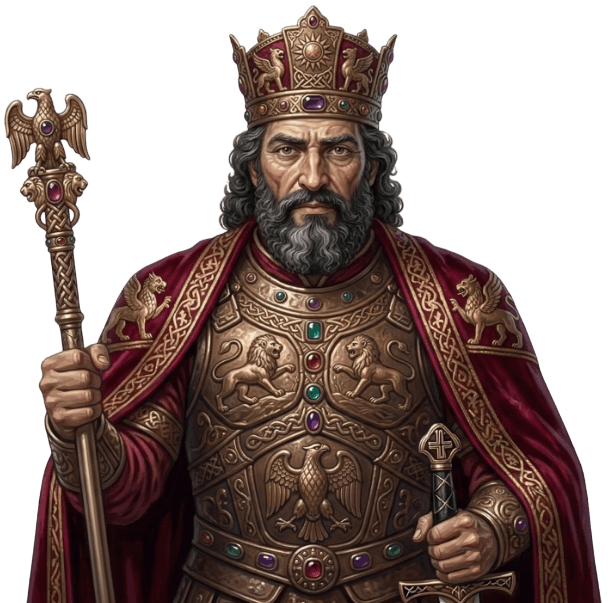
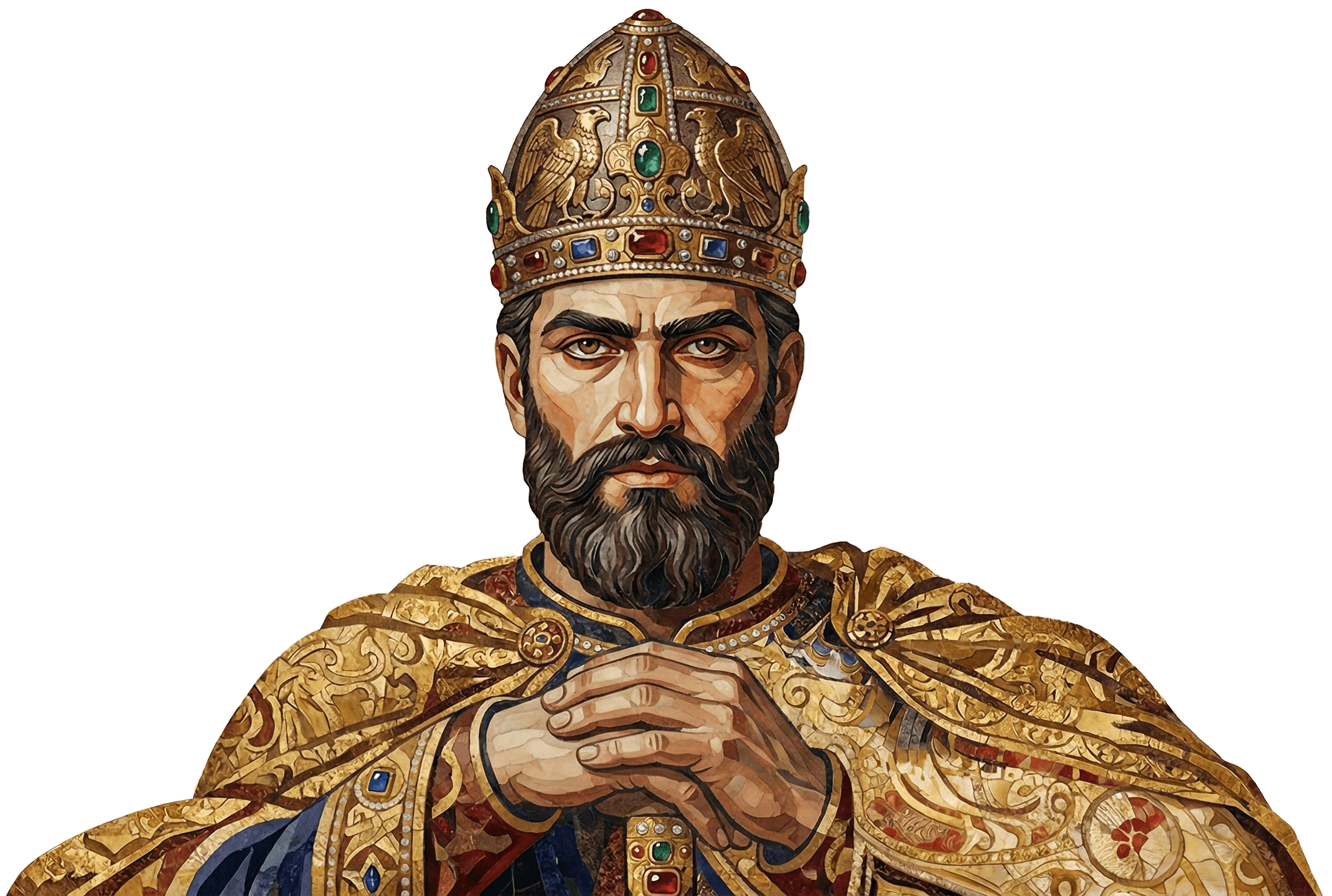
Orontes IV, also known as Yervand the Last, reigned between 220 and 200 BC as the final monarch of the Orontid (Yervanduni) dynasty in Armina (Greater Armenia). He is historically recognized for moving the royal seat from Armavir to his newly founded capital, Yervandashat (Ayrarat), and establishing the sacred religious center of Bagaran. His reign marked a significant era of Hellenistic cultural influence and major construction before the transition of power to Artaxias I.
Orontes IV reigned between 220 and 200 BC, presiding over a period of grand urban development in the central provinces of Armina (Greater Armenia). When the Yeraskh (Araks) river shifted its course away from the old capital of Armavir, the king founded a new fortified capital named Yervandashat (Ayrarat) at the confluence of the Yeraskh and Akhuryan rivers. He protected the citadel with high walls and established the nearby settlement of Ervandakert. His court was a bastion of Hellenistic culture, where royal affairs were conducted in the Greek language and the elite social circles encouraged the arts and traditions of the Mediterranean world.
The Sacred Statues of Bagaran
A central pillar of Orontes' reign was the establishment of the religious site of Bagaran, where he appointed his brother, Ervaz, as the High Priest of the realm. To honor the gods, he brought massive bronze statues in the Hellenistic style to the city, dedicated to Zeus (Aramazd), Artemis (Anahit), and Herakles (Vahagn). At the ancient capital of Armavir, he founded a magnificent shrine to Apollo (Mithra), featuring a golden statue of the sun god riding a chariot pulled by four horses. These monuments reflected a king who sought to immortalize his reign through divine imagery and architectural grandeur.
The Betrayal and the Fall of the Orontids
The sunset of the Yervanduni dynasty was defined by a violent power struggle against Artaxias I (Artashes). Encouraged by the Seleucid King Antiochus III, Artaxias led a revolt against the king, fueled by a long-standing personal and dynastic rivalry. In 201 BC, their forces clashed at the Battle of Yervandavan. Orontes IV was defeated and, according to Aramaic inscriptions found at Armavir, died at the hands of his own army in an act of betrayal. While the fall of Orontes IV signaled the end of his house's rule over Greater Armenia, his successor Artaxias initially continued to call his own house "Orontid" to justify his claim to the throne.
Royal Record
Family & Notes
Children: Samus, Arsames. Notes: The first truly independent king of the dynasty; took advantage of the chaos following Alexander’s death to assert sovereignty.
Wars & Battles
2 Conflicts: 1. Wars of the Diadochi (c. 320–301 BC); 2. Resistance to Seleucid expansion.
War Record
1 Won, 1 Draw
Territory Size
c. 300,000 km2km^2km2
Allied Rulers
Antigonus I (briefly)
“The legacy of Orontes V The Last Orontid endures through the centuries — a testament to the enduring spirit of the Armenian people and their unbroken pursuit of sovereignty, culture, and faith.”
Continue the Journey