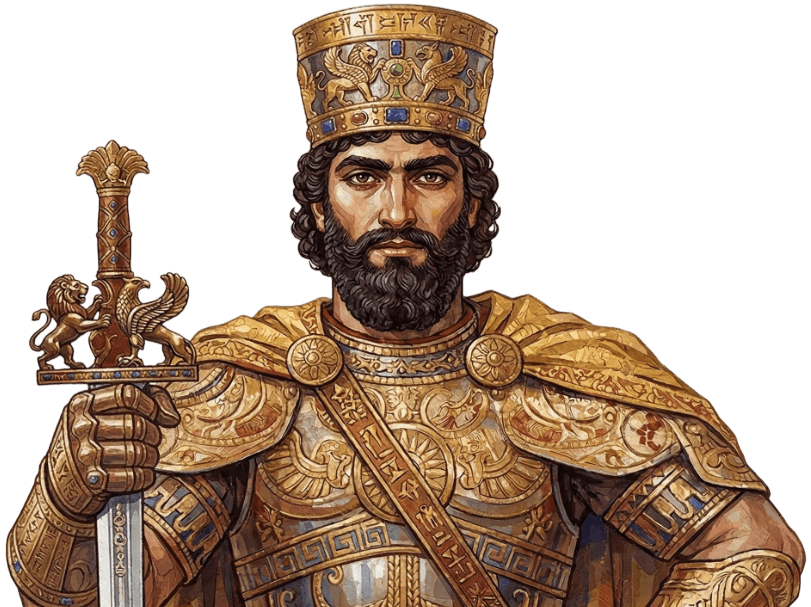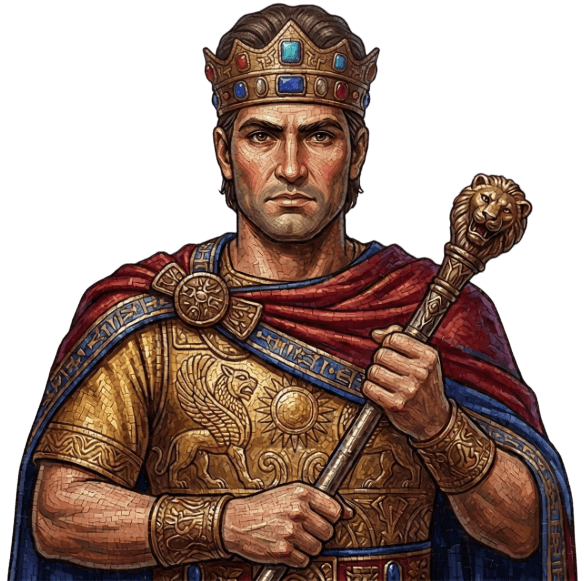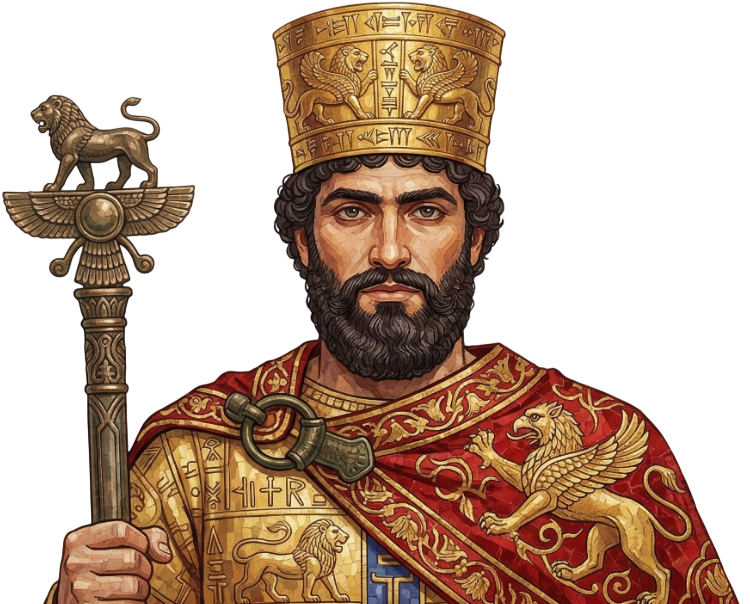
Rusa I
Araratian Dynasty — 735–714 BC
Kingdom of Urartu
Rusa I, known to the Assyrians as Ursa and possibly born as Uedipri, reigned from 735 to 714 BC as the King of the Kingdom of Ararat (Urartu). Succeeded his father, Sarduri II, during a period of Assyrian resurgence, Rusa I focused his early reign on internal stabilization and administrative reform. He famously moved the royal seat from the damaged Tushpa to the newly constructed fortress of Rusahinili (Toprakkale). He significantly strengthened the monarchy by subdividing governorships to curb the power of local officials and expanded the kingdom's reach, particularly to the east of Lake Sevan and into the spiritual center of Ardini-Musasir. His foreign policy was characterized by the formation of a massive anti-Assyrian coalition that included Phrygia, Cappadocia, and Cilicia. However, his later years were marred by a series of devastating military reversals. After suffering a heavy defeat against the encroaching Cimmerians in 715 BC and the subsequent invasion by the Assyrian King Sargon II in 714 BC, which resulted in the looting of the temple at Musasir, Rusa I committed suicide. He was succeeded by Argishti II, who worked to restore the kingdom's former status.
Rusa I reigned between 735 and 714 BC, ascending to the throne after the heavy defeats his father, Sarduri II, suffered at the hands of Tiglath-Pileser III. Recognizing the vulnerability of the traditional capital, Rusa I established a new royal center at Rusahinili (Toprakkale) near modern-day Van. To prevent future internal instability, he implemented a major administrative overhaul, fracturing large provinces into smaller districts to limit the influence of governors and centralize power under the crown. Despite the pressure from Assyria, he utilized periods of Assyrian internal strife—specifically during the reign of Shalmaneser V—to successfully reclaim southern territories and re-establish Urartian presence in the sacred city of Ardini-Musasir.
Expansion into the Northern Highlands
While his southern borders remained a site of constant friction, Rusa I aggressively expanded the kingdom's influence toward the north and northeast. He focused heavily on the Lake Sevan basin, reclaiming territories lost during his father’s reign and conquering nineteen additional mountain lands on the eastern shores of the lake. Near the site of Teishebaini (Odzaberd), he left a cuneiform inscription documenting the capture and reconstruction of a fortress he renamed "The City of the God Teisheba." His northern campaigns were marked by the construction of a dense line of defensive fortifications intended to secure the agricultural and mineral wealth of the highlands.
The Clash of Empires and the Tragic End
The final years of Rusa I’s reign were defined by a three-front struggle against the Assyrian Empire under Sargon II, the migrating Cimmerians, and internal rebellion. Though he had successfully organized a diplomatic coalition with western Anatolian powers to isolate Assyria, the tide turned in 715 BC when his army was defeated by the Cimmerians in the land of Gamir. This loss emboldened several governors to revolt, an uprising Rusa I suppressed before facing Sargon II’s "Eighth Campaign" in 714 BC. After the Assyrians sacked the religious heart of the kingdom at Musasir and his son Melartua was killed during a period of dynastic chaos, Rusa I took his own life. His legacy remains preserved in the massive ruins of his mountain citadels and the bilingual inscriptions of Topuzawa, which testify to his efforts to maintain the sovereignty of the Armenian Highlands.
Royal Record
Family & Notes
Father: Sarduri II. Wife: Rusaina. Sons: Melartua, Argishti II. Assyrians destroyed his castle under Lake Van. The "castle under Lake Van" is a legend. Assyrian records state Sargon II destroyed the city of Musasir (not a castle) and the temple of Haldi in 714 BC, which was a devastating blow to Rusa I's prestige. Credit: Sargon II's "Letter to the God Ashur" and his Khorsabad annals.
Wars & Battles
2 recorded wars (Assyrians, Cimmerians). 2-3 wars (Assyrians, Cimmerians, Colchis).
War Record
0 Won, 2 Lost. 1 partial win, 2 Lost
Territory Size
Diminished territory ~300,000 km²
“The legacy of Rusa I endures through the centuries — a testament to the enduring spirit of the Armenian people and their unbroken pursuit of sovereignty, culture, and faith.”
Continue the Journey