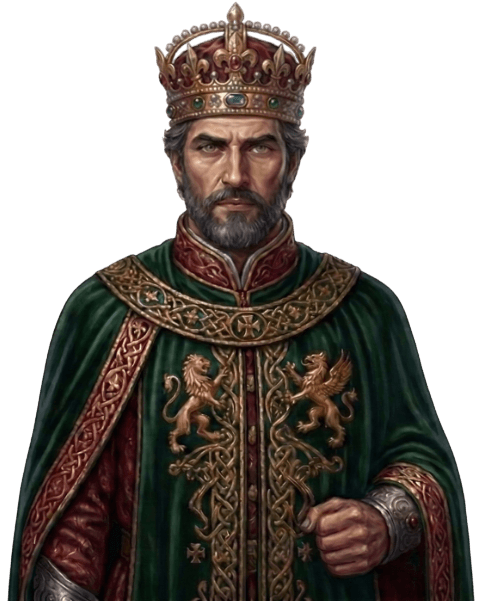
Samus
Orontid Dynasty — c. 260 BC ~ –243 BC ~260–240 BC
Orontid Dynasty
Sames reigned from 260 to 240 BC as the first sovereign king of the unified Kingdom of Sophene and Commagene (Tsopk). Following his father, Orontes III, he transitioned his house from satrapal status to full royalty during the power struggle between the Seleucid and Ptolemaic empires. He is distinguished in history for issuing the oldest known Armenian coins and for founding the royal city of Shamshat (Samosata). His reign established a multi-ethnic state that served as a vital geopolitical center in the southern Armenian Highlands.
Sames reigned between 260 and 240 BC, a period defined by the enduring conflict between the Seleucid Empire and Ptolemaic Egypt. Utilizing the regional instability, Sames declared himself the independent king of a unified realm encompassing Tsopk (Sophene) and Commagene. Unlike his predecessors who held the rank of satrap, he asserted his status as a monarch, a shift clearly evidenced by the minting of the earliest recorded Armenian currency. His anti-Seleucid stance led him to likely support the Egyptians, and his court became a center for high-level diplomacy, famously providing refuge to Prince Cielas of Bithynia around 250 BC during a struggle for the Bithynian throne.
The Foundation of Shamshat
A hallmark of Sames’ reign was the construction of Shamshat (Samosata), the eponymous capital of the southern Armenian world. Strategically founded around 245 BC, the city became the administrative hub of a diverse state that included the region of Osroene. Ruling over a multi-ethnic population of various languages and traditions—including those of Aramean origin—Sames established Shamshat as a monumental administrative center that linked the highlands with the cultural currents of Mesopotamia. The city would later be known as the "Antioch of Commagene," standing as a testament to his vision of a centralized and fortified state.
The Orontid Legacy and Identity
The historical identity of Sames, often recorded in Babylonian sources as "Shamush," reflects the deep cultural intersections of the 3rd century BC. While his name suggests Assyrian-Babylonian linguistic roots, he remained a quintessential representative of the Orontid (Yervanduni) dynasty, dedicated to preserving the independence his father had fought for. Throughout his twenty-year reign, he strengthened the foundations of Armenian statehood before passing the throne to his son, Arsames. His legacy is preserved through his construction projects and the distinct coins that first signaled Armenian sovereign authority to the ancient world.
Royal Record
Family & Notes
Sibling: Arsames. Notes: Little is recorded; he likely shared power or ruled a specific region while his brother managed other territories.
Wars & Battles
Unknown: Likely minor border skirmishes with Seleucid forces.
War Record
Unknown
Territory Size
c. 300,000 km2km^2km2
Allied Rulers
Unknown
“The legacy of Samus endures through the centuries — a testament to the enduring spirit of the Armenian people and their unbroken pursuit of sovereignty, culture, and faith.”
Continue the Journey