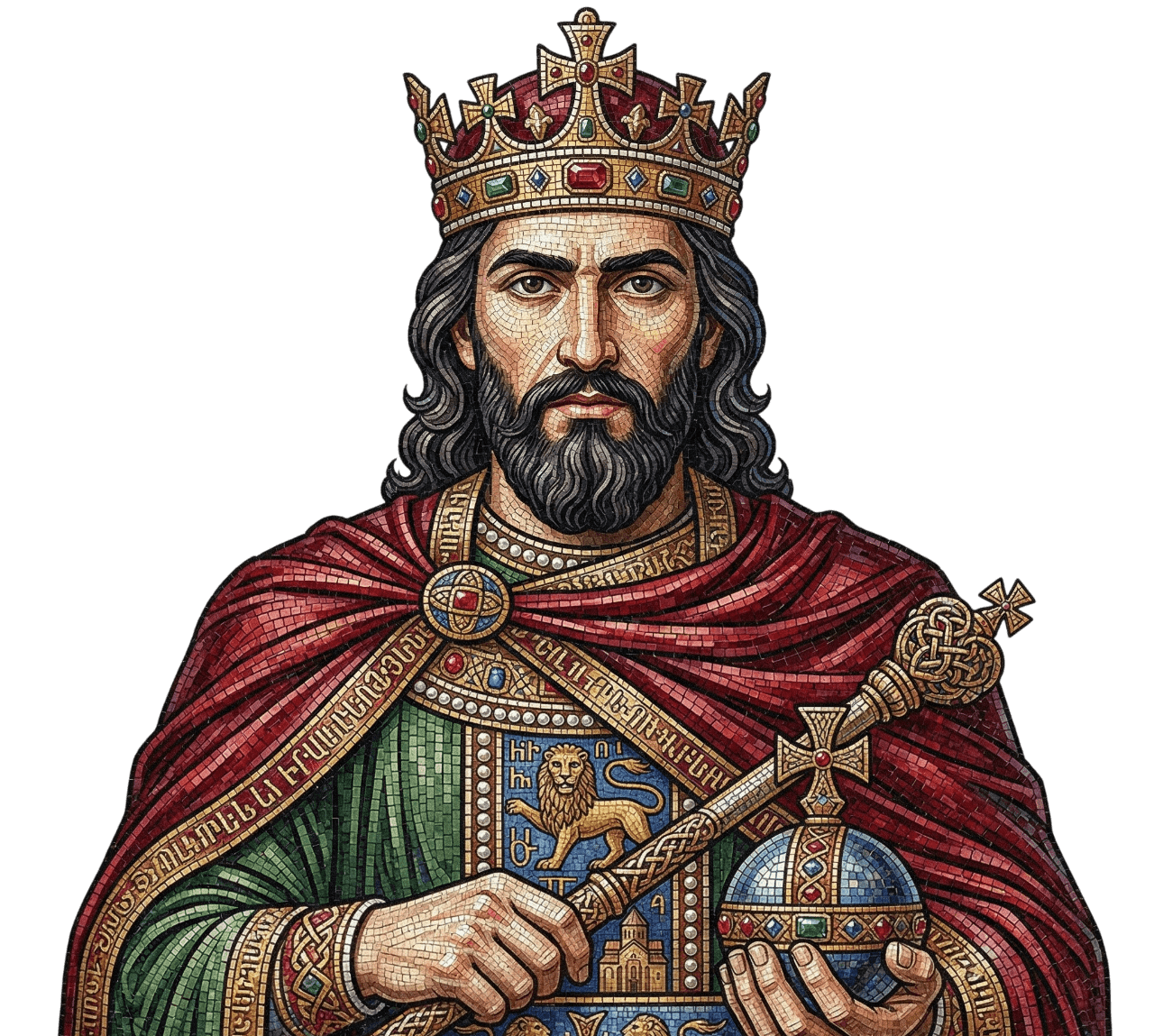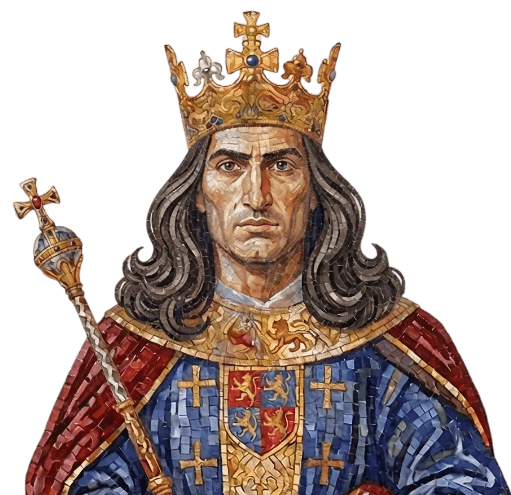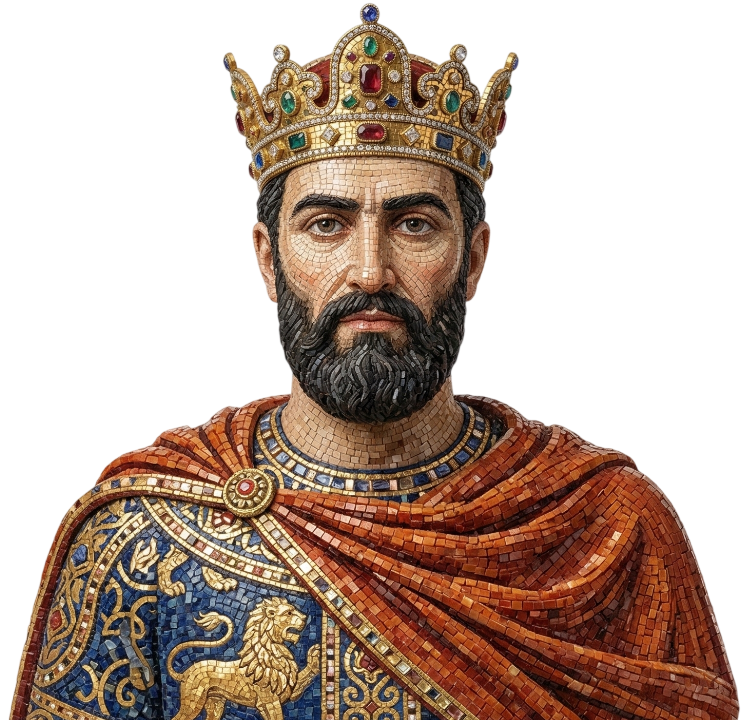
Smbat
Hethumid Dynasty — 1296-1298 AD
Armenian Kingdom of Cilicia
Smbat reigned from 1296 to 1298 AD as the monarch of Cilician Armenia (Kilikia). A member of the Hethumid (Hetumyan) dynasty and the son of King Leo II, he seized the throne during the temporary absence of his elder brothers, Hethum II and Thoros III, who were on a diplomatic mission to Constantinople. To validate his usurpation, he secured formal recognition from the Mongol Ilkhan Ghazan and formed a matrimonial alliance with a Mongol princess. His short and violent reign was characterized by a ruthless attempt to eliminate his rivals within the royal house. Upon the return of his brothers, Smbat ordered their arrest and imprisonment in the fortress of Bardzrberd (Partzerpert), where he had Hethum II blinded and Thoros III murdered. His authority was eventually challenged by his younger brother, Constantine, leading to his deposition and final years in exile on the island of Euboea.
Smbat reigned between 1296 and 1298 AD, coming to power by exploiting the political vacuum left by his elder brothers. Displeased with the leadership of Hethum II and Thoros III, Smbat utilized their journey to the Byzantine capital to seize the crown and undergo a formal coronation. Recognizing that his hold on the state required external legitimacy, he traveled to the court of the Mongol Khan Ghazan in 1297 AD. He was successful in receiving formal recognition as the sovereign of Cilician Armenia (Kilikia) and reinforced this diplomatic bond by marrying a relative of the Mongol ruler. This alliance allowed him to present himself as the sanctioned defender of the highlands against the Mamluk Sultanate of Egypt.
The Dynastic Purge at Bardzrberd
The internal rule of Smbat was marked by extreme measures to secure his position against his kin. When Hethum II and Thoros III returned to the highlands, Smbat had them intercepted and transported as captives to the fortress of Bardzrberd (Partzerpert). In a brutal series of commands, he ordered Hethum II to be partially blinded by cauterization and directed the execution of Thoros III, who was strangled to death in 1298 AD. To bolster his standing against the rising Arab threat, Smbat maintained active diplomatic correspondence with the Pope and the kings of England and France, seeking Western military aid to preserve the independence of the Armenian state.
The Fall of the Usurper
The reign of Smbat ended in a sudden reversal of fortune when his brother Constantine turned against him. Smbat was deposed and imprisoned while Hethum II’s recovery began. Although Smbat later conspired with Constantine to resume the throne, the attempt failed, and with the support of the Crusaders, Hethum II was fully restored to power in 1299 AD. Both Smbat and Constantine were subsequently expelled from the country. After one final, unsuccessful attempt to seize the crown in 1309 AD, Smbat was permanently exiled. He spent his remaining years in isolation on the island of Euboea, where he died around 1310 AD, marking the end of a reign defined by fratricidal struggle and the fracturing of Hethumid unity.
“The legacy of Smbat endures through the centuries — a testament to the enduring spirit of the Armenian people and their unbroken pursuit of sovereignty, culture, and faith.”
Continue the Journey