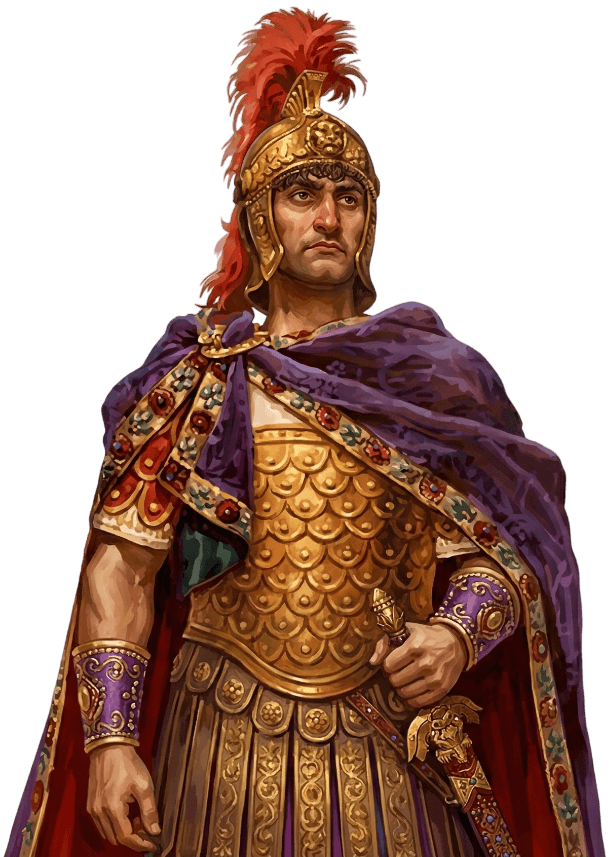
Tigranes IV & Erato
Co-rulers
Artaxiad Dynasty — Tigran IV 8-1 BC Erato 8-5 BC, 2-1 BC, 6-12 AD
Artaxiad Dynasty
Tigranes IV reigned from 8 BC to 5 BC and again from 2 BC to 1 AD as the monarch of the Kingdom of Armina (Greater Armenia) alongside his sister-wife, Erato. Ascending the throne without the approval of Augustus, he initially leaned toward Parthia for support, which led to a Roman military intervention and his temporary replacement by his uncle, Artavasdes III. He was restored to power in 2 BC following a popular uprising against the Roman-appointed king who was viewed as a stranger to the Armenian reality. His second reign was marked by efforts to secure formal Roman recognition and a return to traditional Artaxiad imagery on his coinage. He was killed in 1 AD while repelling an invasion of Caucasian Sarmatian tribes, leading to the final abdication of Queen Erato and the end of the direct Artaxiad line.
Tigranes IV reigned between 8 and 5 BC and again from 2 BC until 1 AD, a period of constant struggle for the sovereignty of the Kingdom of Armina (Greater Armenia). Following the death of Tigranes III, the Armenian people installed Tigranes IV and his queen-consort Erato without Roman consent. Their initial policy was staunchly anti-Roman and pro-Parthian, which prompted the Emperor Augustus to send an army in 5 BC to depose them in favor of their uncle, Artavasdes III. However, the Armenian population remained dissatisfied with a ruler who had lived in Rome for twenty-five years. By 2 BC, a mass revolt overthrew the Roman appointee, successfully restoring Tigranes IV and Erato to the throne.
Diplomacy and Symbolic Authority
During his second reign, Tigranes IV sought to stabilize the state and avoid a full-scale war with Rome by sending gifts and expressions of submission to Augustus. To receive formal recognition, he was ordered to meet with the Roman commander Gaius Caesar in the East. His authority was documented through distinct coinage; his first reign featured a heavily bearded "Parthian" style, while his second reign saw a return to beardless portraits wearing the traditional five-pointed Armenian tiara. These coins often featured Erato on the reverse, emphasizing their joint rule. Historians of the era, such as Sextus Rufus, noted that the Armenian kingdom remained very strong during this period despite the constant pressure from external empires.
The Fall of the Last Artaxiad
The reign of Tigranes IV came to a sudden and violent end in 1 AD. While leading his forces to repel the raiding attacks of Caucasian mountain tribes, specifically the Sarmatians, the king was killed in battle. Some accounts suggest his death may have also been linked to internal revolts by those angered by his recent diplomatic alliance with Rome. Tigranes IV left behind a daughter who would later marry King Pharasmanes I of Iberia, but his death in the field signaled the functional end of the direct Artaxiad line. Upon his passing, Erato abdicated the throne, and the Armenians were forced to request a new monarch from Augustus, who eventually appointed Ariobarzanes.
Royal Record
Family & Notes
Info: Brother and sister co-rulers; their reign saw the final collapse of the Artaxiad bloodline as the last direct heirs.
Wars & Battles
2 Wars: 1. Anti-Roman revolt (8–5 BC); 2. Various local insurrections.
War Record
1 Partial Win, 1 Loss
Territory Size
c. 300,000 km2km^2km2
Allied Rulers
Phraataces (Parthia)
“The legacy of Tigranes IV & Erato Co-rulers endures through the centuries — a testament to the enduring spirit of the Armenian people and their unbroken pursuit of sovereignty, culture, and faith.”
Continue the Journey