Artavasdes I
Artaxiad Dynasty — 160–115 BC
Artaxiad Dynasty
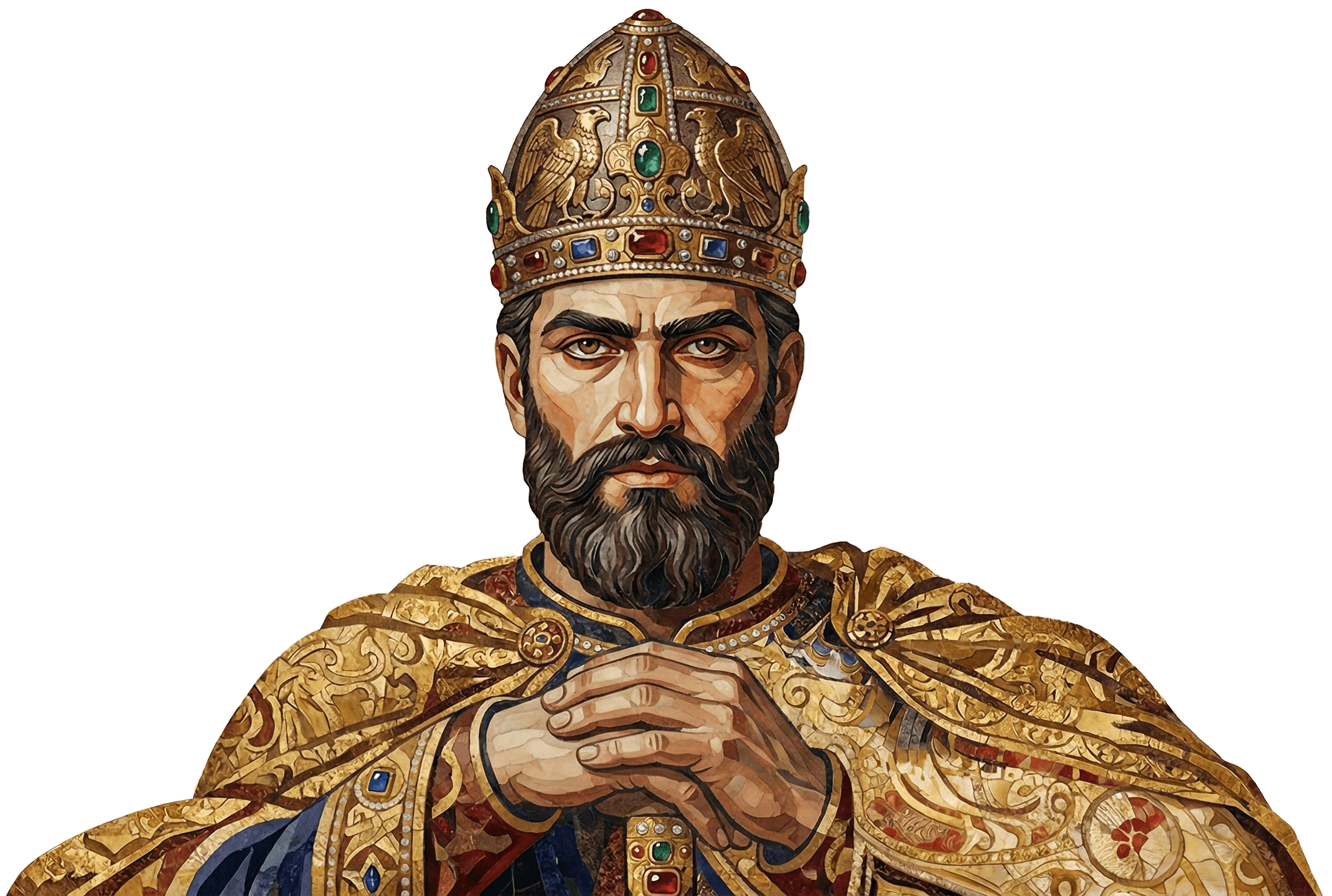
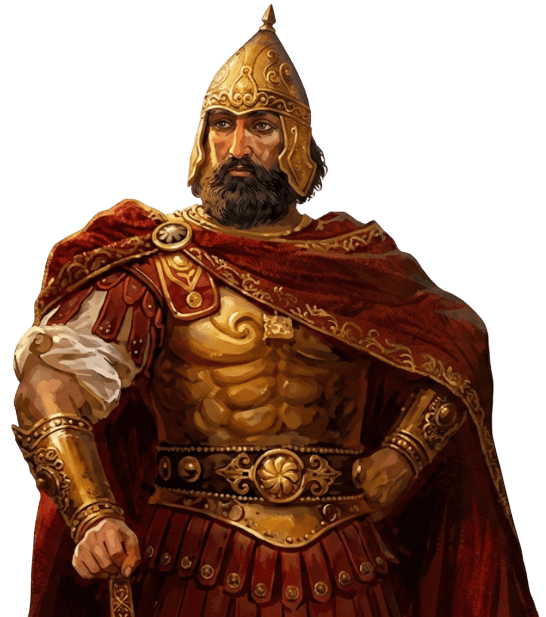
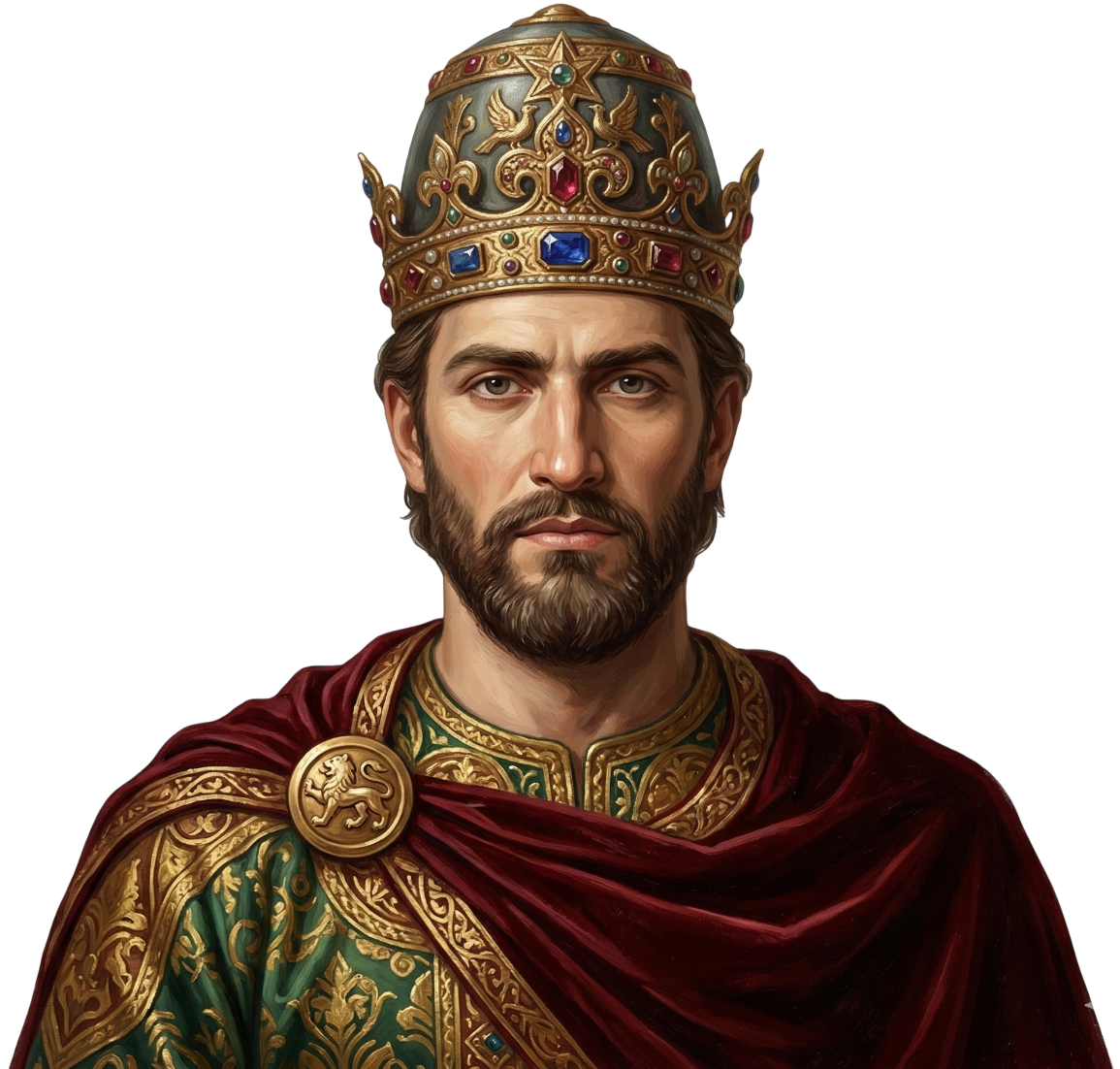
Artavasdes I reigned from 160 to 115 BC as the successor to his father, Artaxias I, in Armina (Greater Armenia). His reign was marked by a significant clash with the Parthian Empire around 120 BC, where he was defeated by Mithridates II. This event forced the Armenian king to acknowledge Parthian suzerainty and yield the future Tigranes the Great—his son or nephew—as a royal hostage. Beyond southern military conflicts, he is credited with expanding Armenian influence into Kartli (Iberia) by installing his son, Artaxias, as the king of that region, thus founding the Iberian Artaxiad dynasty. In Armenian historiography and folklore, he remains a central figure of the Vipasank epic, often portrayed as a tragic and powerful monarch whose fate became entangled with the sacred legends of the highlands.
Artavasdes I reigned between 160 and 115 BC, taking the throne during an era of increasing pressure from the rising Parthian Empire. Historical accounts by the Roman historian Justin reveal that around 120 BC, the Parthian King Mithridates II invaded the highlands, defeating Artavasdes and forcing him to accept a subordinate status. A critical condition of this peace was the surrender of Tigranes—the king's relative—who was sent to the Parthian court as a hostage. This act ensured a fragile stability for the kingdom but set the stage for the dramatic return of the hostage prince years later to reclaim his heritage.
The Foundation of the Iberian Line
A major diplomatic and military achievement of Artavasdes’ reign was his intervention in the political affairs of Kartli (Iberia). According to the Georgian Chronicles, the local princes requested the aid of the Armenian king to dethrone King Parnajom. Artavasdes led an army through Tashir and defeated Parnajom in a decisive battle, successfully installing his son Artaxias on the Iberian throne. This campaign established the Iberian branch of the Artaxiad dynasty and strengthened the northern influence of the Armenian monarchy, securing the borders of the highlands through strategic marriage and military alliance.
The Curse and the Legend of Masis
In Armenian folklore, preserved by the historian Movses Khorenatsi, Artavasdes I is a figure of mythic proportions. Legend states that during the funeral of his father, Artaxias I, the young king complained that his father had taken all the land's prosperity with him into the grave. In response, the dead king cursed him from the tomb, prophesying that he would be seized by spirits while hunting on Masis (Ararat). Tradition holds that Artavasdes was indeed pulled into a cave on the mountain, where he remains chained. It is said that two dogs gnaw at his chains, and blacksmiths strike their anvils to strengthen the iron links and prevent the imprisoned king from emerging to destroy the world.
Royal Record
Family & Notes
Child: Tigranes I. Notes: Focused on internal consolidation; forced to send his son as a hostage to Parthia to maintain peace.
Wars & Battles
2 Wars: 1. Defensive wars against Parthia; 2. Border skirmishes with Pontus.
War Record
1 Won, 1 Draw
Territory Size
c. 350,000 km2km^2km2
Allied Rulers
Mithridates II (Parthia)
“The legacy of Artavasdes I endures through the centuries — a testament to the enduring spirit of the Armenian people and their unbroken pursuit of sovereignty, culture, and faith.”
Continue the Journey