Artavasdes II
The Playwright King
Artaxiad Dynasty — 55–34 BC
Artaxiad Dynasty
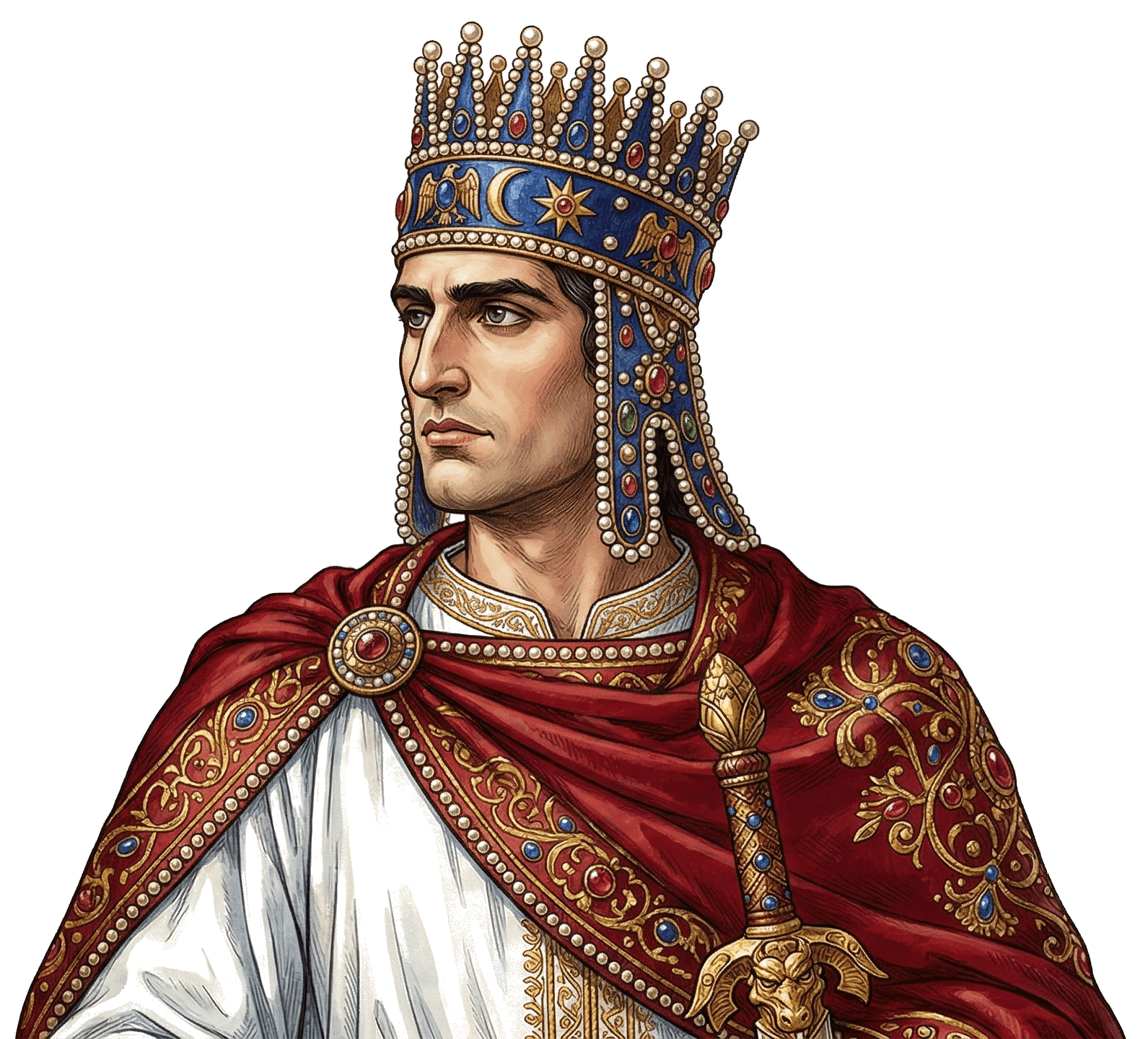
Artavasdes II reigned from 55 to 34 BC, succeeding his father, Tigranes the Great, as the monarch of the Kingdom of Armina (Greater Armenia). Holding the title of "King of Kings," he inherited a powerful and independent state, continuing the legacy of the Artaxiad dynasty during a period of high-stakes diplomacy between Rome and the Parthian Empire. Known as an accomplished scholar of Greek literature and a composer of tragedies and histories, his reign was defined by the struggle to maintain Armenian sovereignty. After navigating alliances with both the Roman Triumvirs and the Parthian court, he was eventually captured by Mark Antony and taken in golden chains to Alexandria. He was executed in 31 BC on the orders of Cleopatra VII.
Artavasdes II reigned between 55 and 34 BC, assuming power during the height of the Roman-Parthian wars. In 54 BC, he offered the Roman Proconsul Crassus 40,000 reinforcements for a campaign against Parthia, advising a route through the Armenian highlands where the Parthian cavalry would be less effective. When Crassus refused and met his demise at the Battle of Carrhae, Artavasdes shifted his diplomacy, forging a marriage alliance with the Parthian King Orodes II. In a famous display of his Hellenistic education, the king was observing a performance of Euripides' The Bacchae at his court when the severed head of Crassus was brought before him. An accomplished writer himself, Artavasdes was noted by Plutarch for composing Greek tragedies and histories that were respected throughout the ancient world.
The Rivalry with Mark Antony
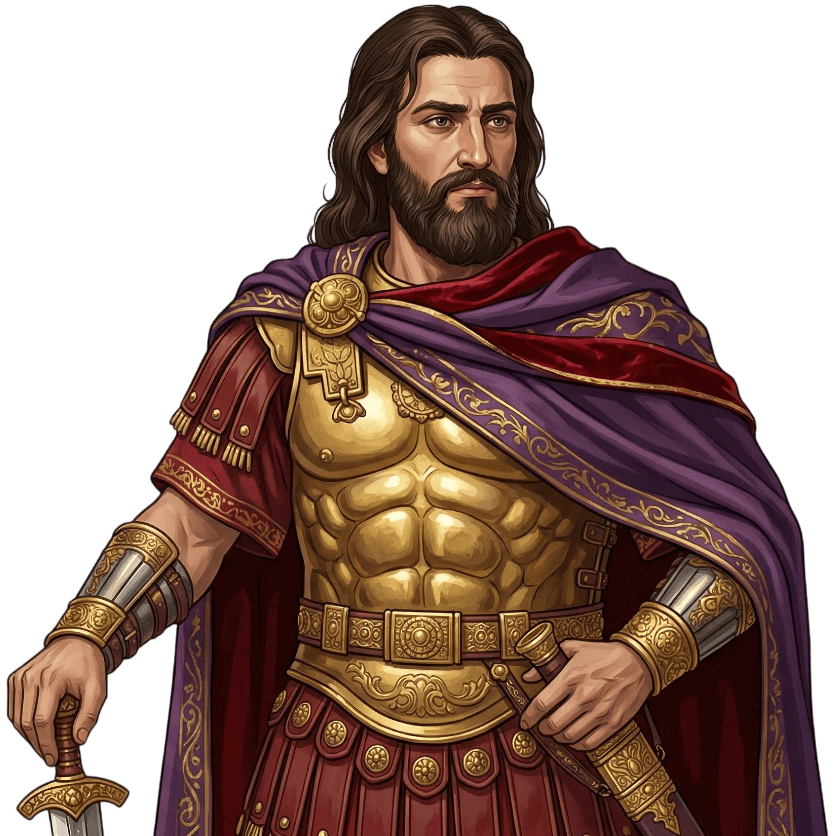
The later years of Artavasdes’ reign were dominated by his volatile relationship with the Roman general Mark Antony. During Antony’s Parthian campaign in 36 BC, Artavasdes acted as the "greatest of all" allied kings, providing 6,000 horse and 7,000 foot soldiers. However, sensing a Roman defeat, Artavasdes eventually abandoned the campaign, leading Antony to seek revenge. In 34 BC, after a failed diplomatic attempt to betroth his son to the king’s daughter, Antony marched on the capital of Artaxata (Artashat). He arrested Artavasdes II under the guise of an alliance, hoping to seize the legendary treasures held in the Armenian castles, and forcibly took the king and the royal family to Egypt.
The Golden Chains of Alexandria
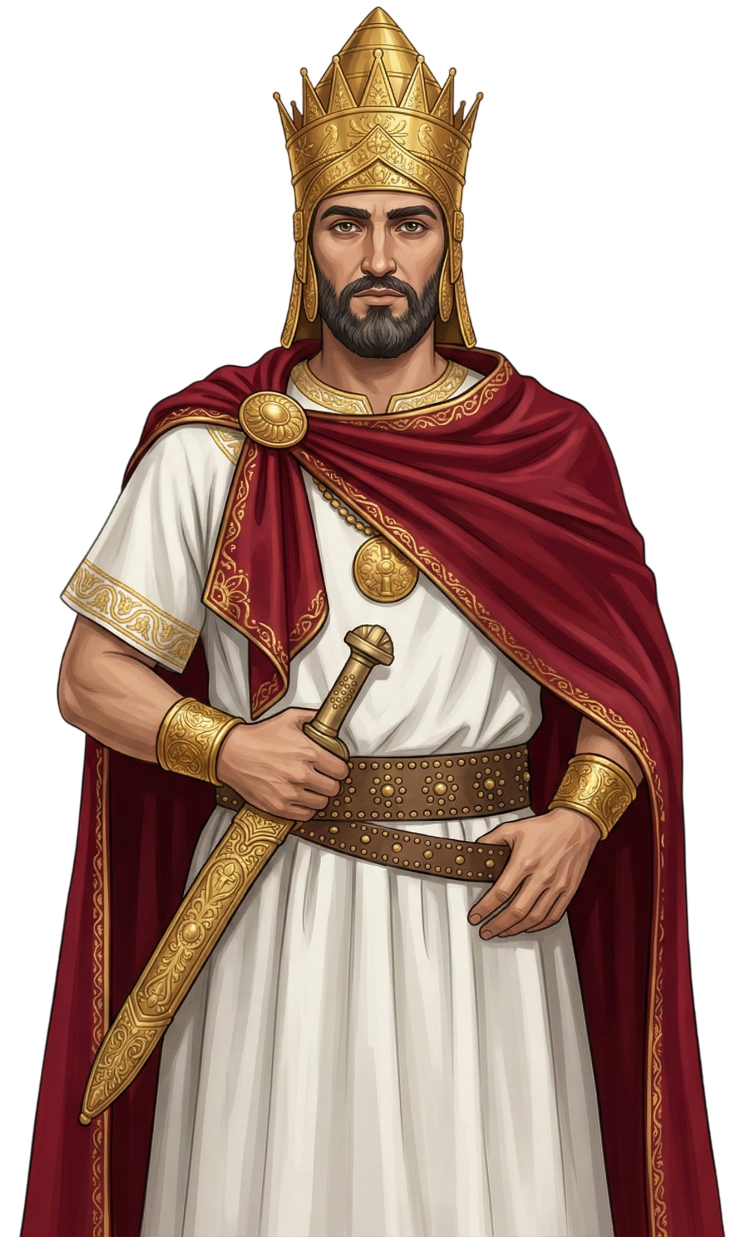
The end of Artavasdes II’s life was marked by an extraordinary display of dignity in the face of captivity. Bound in golden chains, he and his family were forced to march in Antony’s triumphal procession through Alexandria. Despite the pressure to submit, Artavasdes refused to render homage to Cleopatra VII through the act of proskynesis (prostration), a refusal that earned him her lasting enmity. Following Antony's defeat at Actium in 31 BC, Cleopatra had the Armenian king decapitated, sending his head to his enemy, King Artavasdes of Atropatene. In Armenian memory, his imprisonment and the curse of his lineage were transformed into popular legends, where he is said to be held by spirits within Mount Ararat, awaiting a time to return to his people.
Royal Record
Family & Notes
Children: Artaxes II, Tigranes III. Notes: A poet and tragedy writer; caught between Mark Antony and Parthia; executed by Cleopatra of Egypt in 30 BC.
Wars & Battles
4 Wars: 1. Battle of Carrhae (53 BC); 2. Parthian border war; 3. Antony's campaign; 4. Roman-Armenian War.
War Record
1 Won, 1 Lost, 2 Draw
Territory Size
c. 400,000 km2km^2km2
Allied Rulers
Mark Antony (initially)
“The legacy of Artavasdes II The Playwright King endures through the centuries — a testament to the enduring spirit of the Armenian people and their unbroken pursuit of sovereignty, culture, and faith.”
Continue the Journey