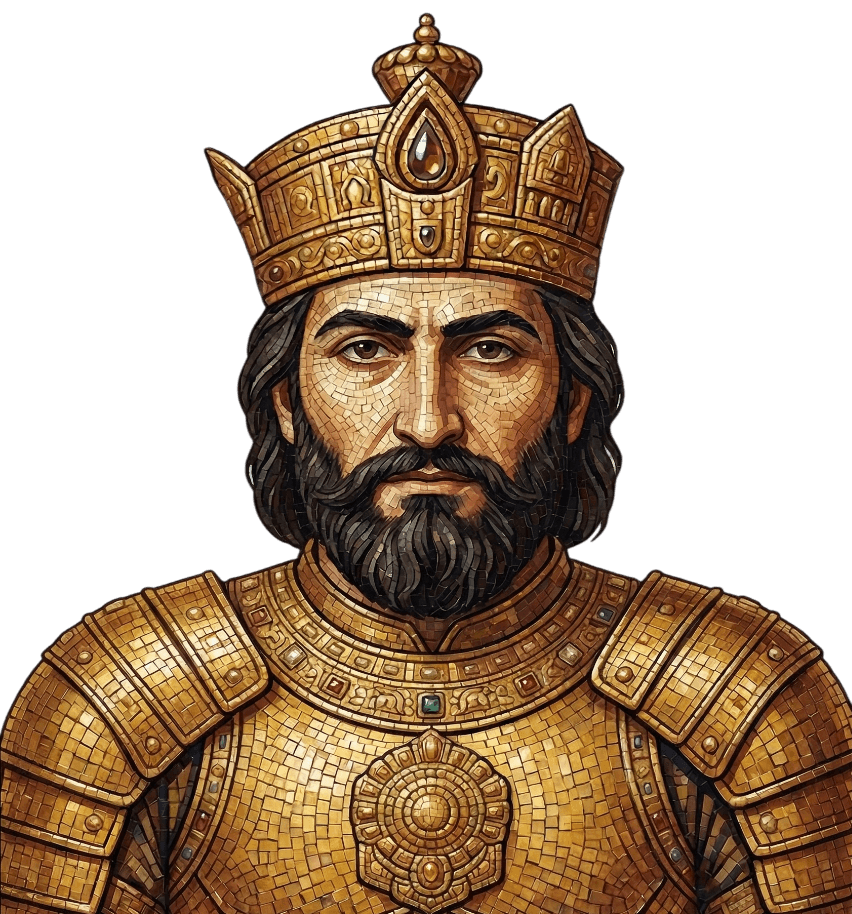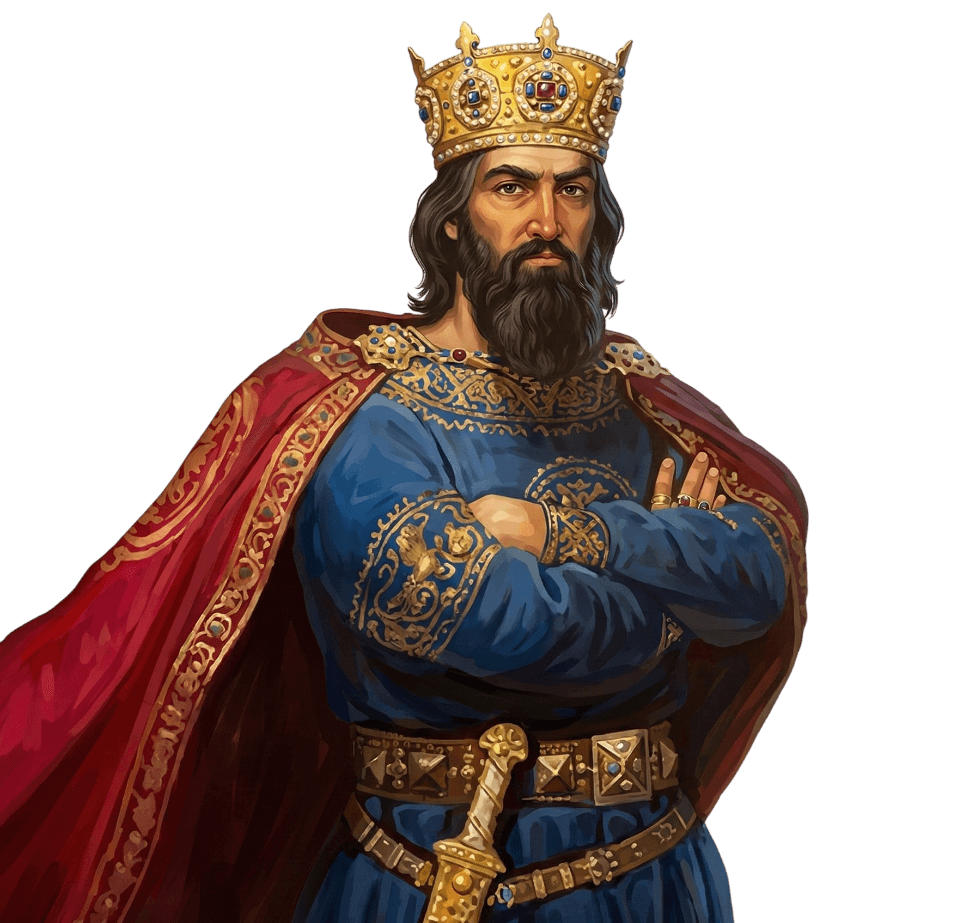
Constantine I
Baron
Rubenid Dynasty — 1095–1100 AD
Armenian Kingdom of Cilicia
Constantine I reigned from 1095 to 1102 AD as the second Lord of Cilician Armenia (Kilikia), succeeding his father, Ruben I. He solidified the foundations of the nascent Armenian state by liberating several provinces from both the Seljuq Turks and the Byzantine Empire. In 1098 AD, he captured the strategic Vahka Fortress, which he established as the permanent princely seat of the Rubenid dynasty. His reign was defined by a critical alliance with the European knights of the First Crusade. By providing essential supplies and military support during the sieges of Antioch, Edessa, and Jerusalem, Constantine I earned the titles of Duke and Marquis from the crusader leaders. He further secured these ties through the strategic marriage of his daughter, Beatrice, to Count Joscelin I of Edessa, establishing a policy of mutual aid that would characterize the Cilician era.
Constantine I reigned between 1095 and 1102 AD, assuming the leadership of the Rubenid (Rubinyan) house during the pivotal era of the First Crusade. Having led Armenian troops since 1090, he understood that the economic survival of his people depended on the control of the Taurus mountain passes. By mastering these defiles, he was able to assess taxes on merchandise transported from the port of Ayas toward central Asia Minor—a vital source of wealth that fueled the rise of Rubenid power. In 1098 AD, he achieved a significant military victory by liberating the fortress of Vahka from foreign occupation, transforming it into a formidable administrative and military center for the Armenian Highlands of the south.
The Alliance with the Crusaders
The arrival of the Western crusaders provided Constantine I with a unique opportunity to challenge Byzantine and Seljuq dominance. The Lord of Cilicia became an indispensable ally to the crusader knights, assisting them significantly during the capture of Antioch, Edessa, and Jerusalem. In appreciation of his aid, the European leaders recognized his sovereignty by bestowing upon him the titles of Duke and Marquis. This era of cooperation was formalized through dynastic diplomacy; Constantine gave his daughter, Beatrice, in marriage to Joscelin I, the Count of Edessa, creating a powerful defensive pact that integrated the Armenian princedom into the wider geopolitical fabric of the medieval Levant.
The Lightning at Vahka and Dynastic Succession
The reign of Constantine I concluded with a sudden and dramatic event recorded by the chronicler Samuel of Ani. While residing in the fortress of Vahka, a lightning bolt reportedly struck the king’s table, leading to his death shortly thereafter. He was buried at the Monastery of Castalon, the same site where his father was interred. Constantine I left his sons, Thoros I and Leo I, a stabilized and prosperous domain that had successfully navigated the arrival of new Western powers while maintaining its independence. His legacy is that of a pragmatic and martial leader who recognized that the wealth of the mountain passes and the strength of international alliances were the keys to the survival of the Armenian state.
Royal Record
Family & Notes
Notes: Founder of the Cilician state; took advantage of the First Crusade's arrival to seize territory from Byzantines and Seljuks.
Wars & Battles
Campaigns: Expansion into the Taurus Mountains and conquest of strategic forts.
War Record
1 Won
Territory Size
c. 30,000–50,000 km2km^2km2
Allied Rulers
First Crusaders
“The legacy of Constantine I Baron endures through the centuries — a testament to the enduring spirit of the Armenian people and their unbroken pursuit of sovereignty, culture, and faith.”
Continue the Journey