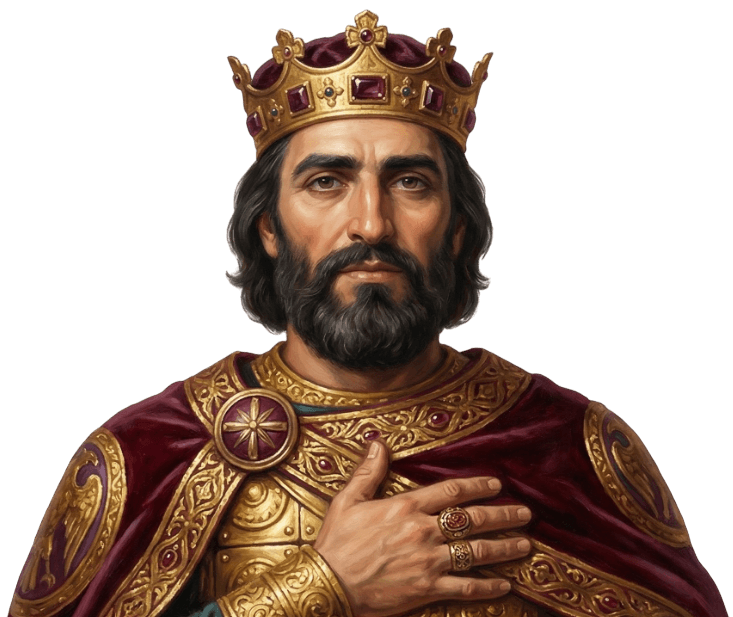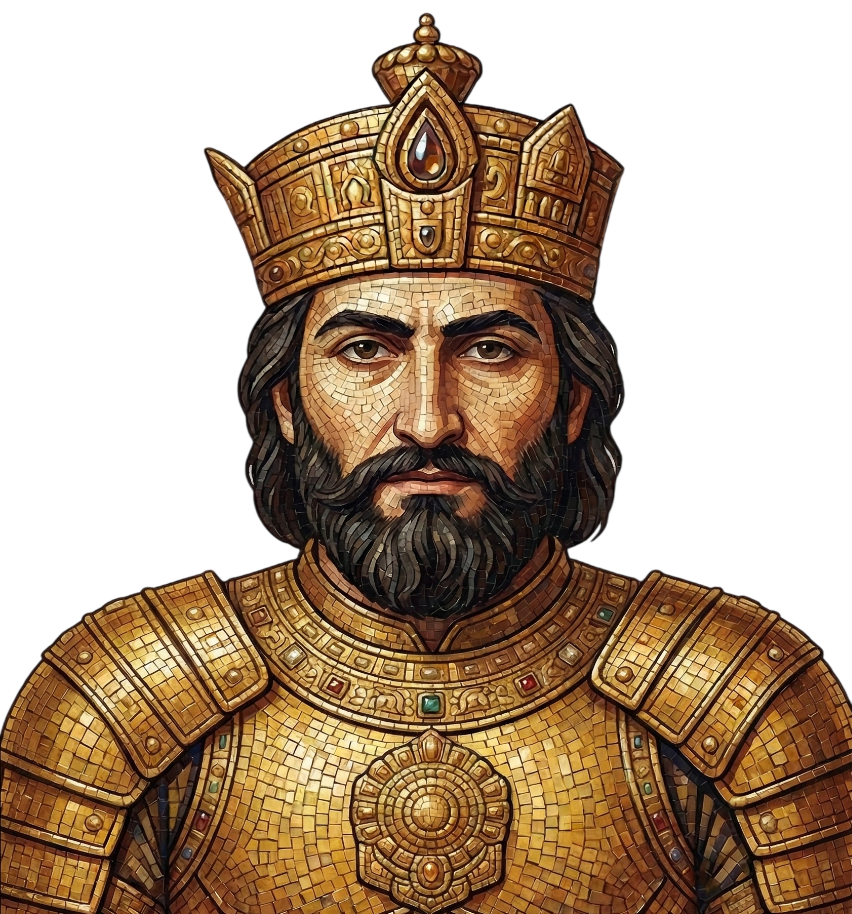
Ruben I
The Founder
Rubenid Dynasty — 1080–1095
Armenian Kingdom of Cilicia
Ruben I reigned from 1081 to 1095 AD as the first Lord of Cilician Armenia (Kilikia) and the foundational patriarch of the Rubenid dynasty. A descendant of the Bagratuni line, he was part of the royal retinue that accompanied King Gagik II to Constantinople and witnessed the monarch's forced exile and subsequent assassination by Byzantine governors. In 1080 AD, Ruben organized a revolt against the Byzantine Empire, rallying Armenian nobles to establish an independent princedom in the rugged highlands of Cilicia. He secured his family’s future by capturing the strategic Castle of Antirim, using it as a military base to expand his authority over the Cilician plain. His leadership effectively laid the territorial and political foundations for the future Armenian Kingdom.
Ruben I reigned between 1081 and 1095 AD, initiating a pivotal shift in Armenian history by establishing a new center of power in the Mediterranean region. Following the treacherous murder of the last Bagratuni king, Gagik II, Ruben gathered a band of Armenian troops and led a fierce revolt against Byzantine rule in 1080 AD. He successfully unified disparate Armenian lords and nobles who had fled the fallen heartlands of Mets Hayk (Greater Armenia), transforming the defense of their culture into a sovereign political movement. By carving out an independent princedom in the mountainous reaches of Cilicia (Kilikia), he provided a new homeland for a people whose ancestral state had been dismantled by the empires of the West and East.
Military Strategy and Territorial Growth
The reign of Ruben I was defined by constant military campaigns to push back imperial Byzantine influence. Through persistent warfare and tactical skill, he expanded his control beyond the mountain fastnesses and into the Cilician plains. A key achievement of this era was the capture of the formidable Castle of Antirim, which served as a vital stronghold and military headquarters for the nascent Rubenid (Rubinyan) house. This fortification became a symbol of Armenian resilience, allowing Ruben to secure the borders of his domain and protect the thousands of refugees who sought sanctuary within the new princedom.
The Legacy of the New Kingdom
Ruben I died in 1095 AD at the age of seventy and was buried at the Monastery of Castalon. Although he began his reign as a rebel leader in exile, his death left behind a stabilized and expanding state. He passed the throne to his son, Constantine I, ensuring the continuity of the Rubenid line which would eventually see the princedom elevated to a full kingdom. His legacy is recorded as the primary architect of Armenian sovereignty in the Cilician era, a monarch who recognized that the survival of the Armenian crown required a new foundation in the fortified mountains of the south.
“The legacy of Ruben I The Founder endures through the centuries — a testament to the enduring spirit of the Armenian people and their unbroken pursuit of sovereignty, culture, and faith.”
Continue the Journey