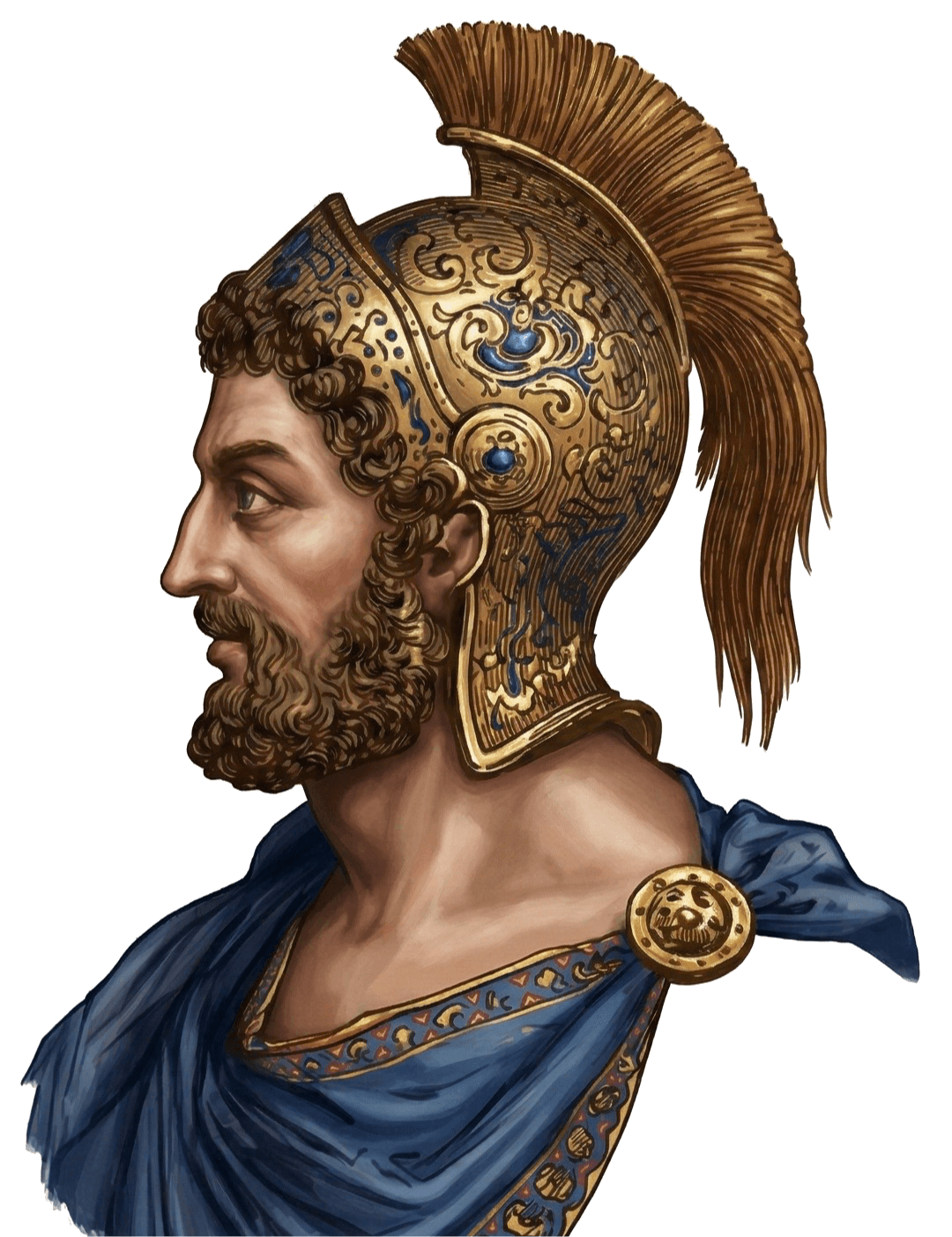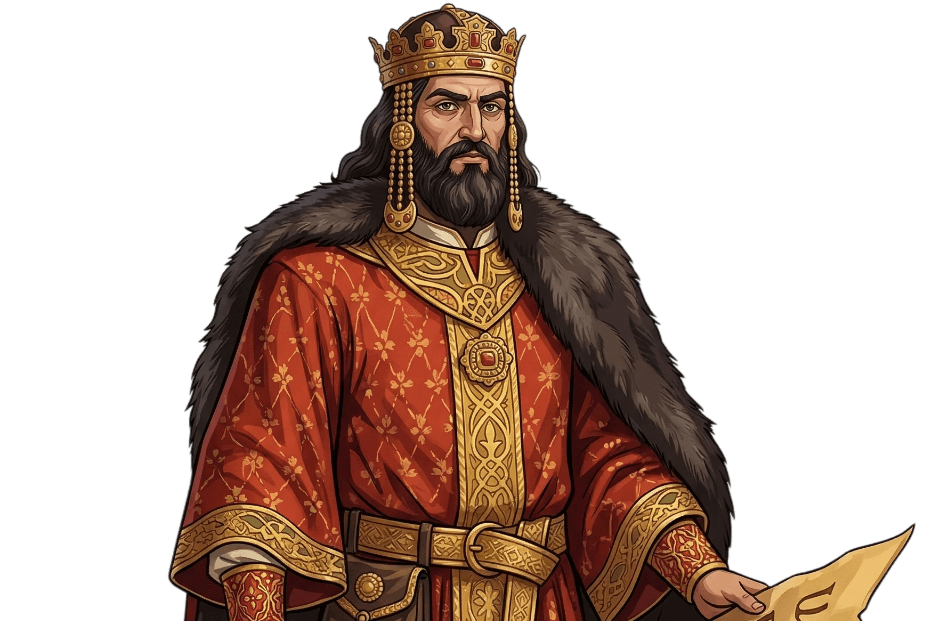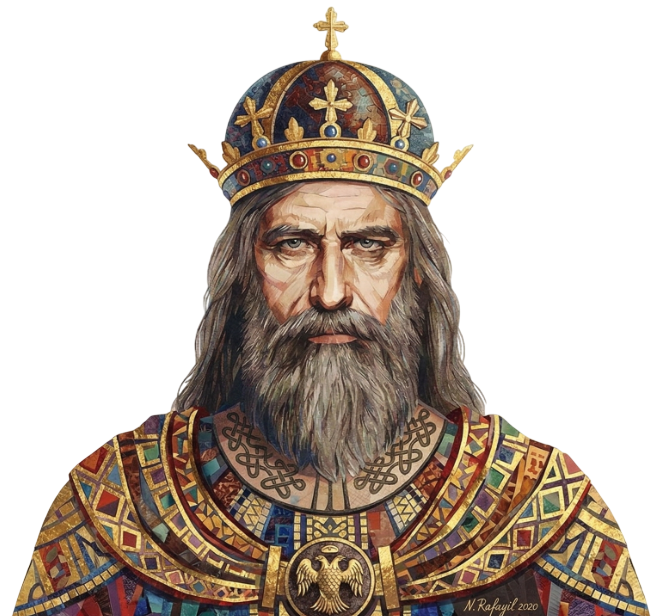
Khosrov IV
Arsacid Dynasty — 387-389, 415-416
Arsacid Dynasty
Khosrov IV reigned from 387 to 392 AD and again from 414 to 415 AD as the monarch of the Kingdom of Armina (Greater Armenia). Appointed by the Sasanian King Shapur III and married to the Persian princess Zruandukht, he was the first ruler of the eastern sector following the formal partition of Armenia. His initial reign in Artaxata (Artashat) and Dvin was established under the Peace of Acilisene, where he governed the vast majority of the Armenian heartland under Sasanian suzerainty. His rule was marked by a constant struggle to navigate the pressures of the two surrounding empires and the internal rivalries of the nobility. Accused of conspiring with Rome to restore national unity and for appointing Catholicos Sahak without Persian approval, he was deposed and imprisoned in the Castle of Oblivion (Anhunsh berd) in Khuzistan. He was eventually released and restored to the throne following the death of his brother Vramshapuh, serving a brief final term before his death in Vagharsapat.
Khosrov IV reigned between 387 and 392 AD, assuming the throne during the pivotal era of the Peace of Acilisene. Following the death of the regent Manuel Mamikonian and the subsequent flight of Arshak III to the Roman sector, the Sasanian King Shapur III appointed Khosrov to govern the eastern portion of the Kingdom of Armina (Greater Armenia). This sector comprised approximately 80 percent of the kingdom's territory and included the traditional capitals. To secure the new monarch's loyalty, Shapur III gave his sister, Zruandukht, to Khosrov in marriage and provided him with a large protective army and a Persian tutor from the House of Zik, effectively establishing him as the guardian of the Arsacid line in the East.
Conflict with the Nobility and Exile
The domestic rule of Khosrov IV was eventually undermined by the shifting allegiances of the Armenian nakharars (nobles). Despite his marriage to a Sasanian princess, he was denounced by a faction of the nobility in 389 AD for allegedly conspiring with the Roman Emperor to reunite the divided kingdom. His downfall was accelerated by his independent decision to appoint Sahak I as Catholicos without seeking Persian confirmation. As a result, the Sasanian court summoned the king to Tizbon (Ctesiphon) and charged him with attempting to restore Armenian state unity. Khosrov was subsequently deported and incarcerated in the infamous Castle of Oblivion (Anhunsh berd) in Khuzistan, where he remained for over two decades while his brother Vramshapuh governed in his stead.
The Restoration and the Sunset of the Dynasty
The final years of Khosrov IV’s life were characterized by a brief and symbolic restoration of his authority. Following the death of King Vramshapuh, the venerable Catholicos Sahak visited the court of the Sasanian King Yazdegerd I to successfully petition for Khosrov’s release. In 414 AD, the elderly king was returned to his ancestral throne in the highlands. Although this second reign lasted only about a year before he passed away in Vagharsapat, it represented a final pulse of Arshakuni sovereignty before a period of direct Sasanian rule. His legacy remains that of a monarch who attempted to balance the survival of the Arsacid house against the total absorption of the highlands by the Persian Empire.
“The legacy of Khosrov IV endures through the centuries — a testament to the enduring spirit of the Armenian people and their unbroken pursuit of sovereignty, culture, and faith.”
Continue the Journey