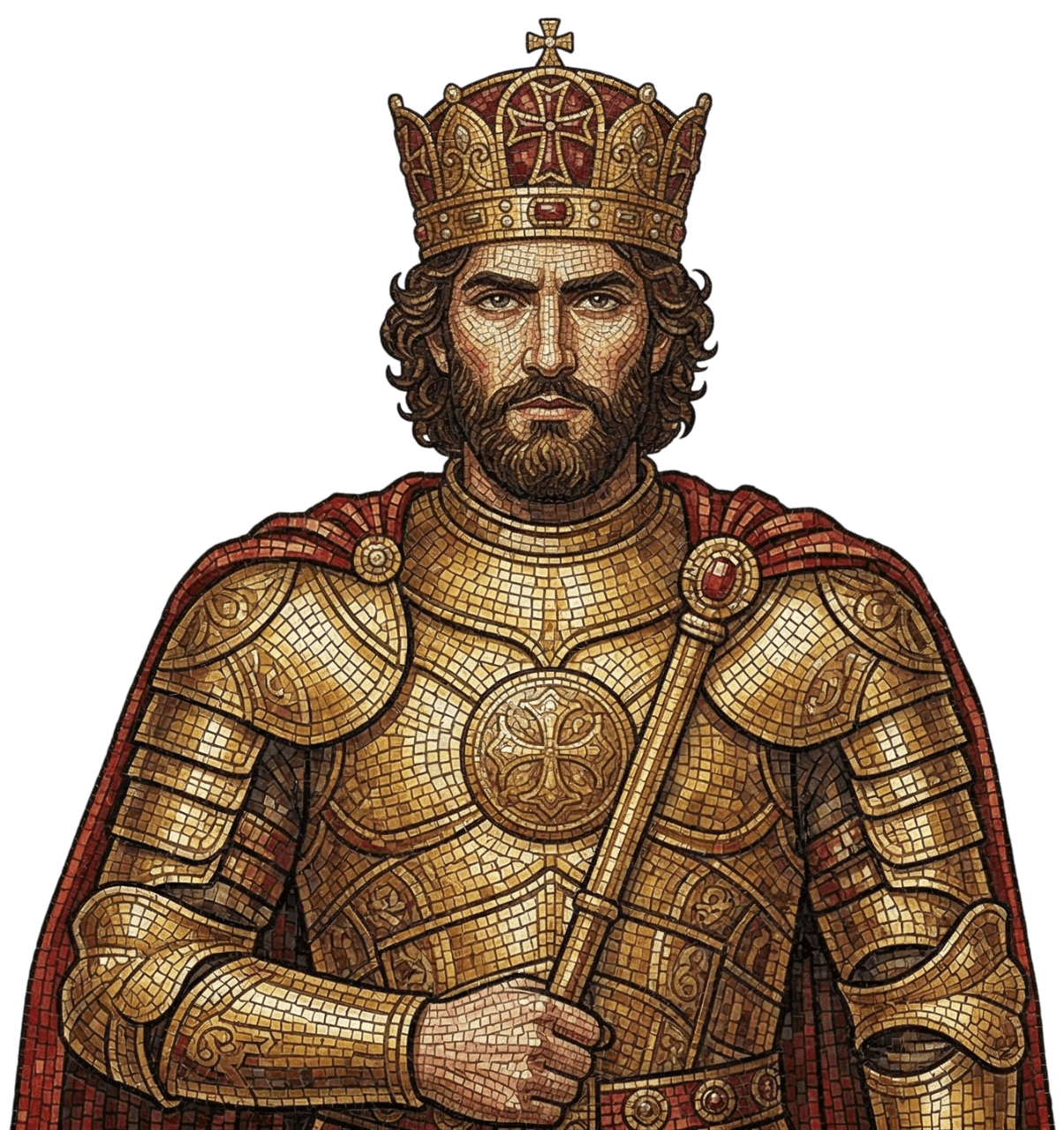
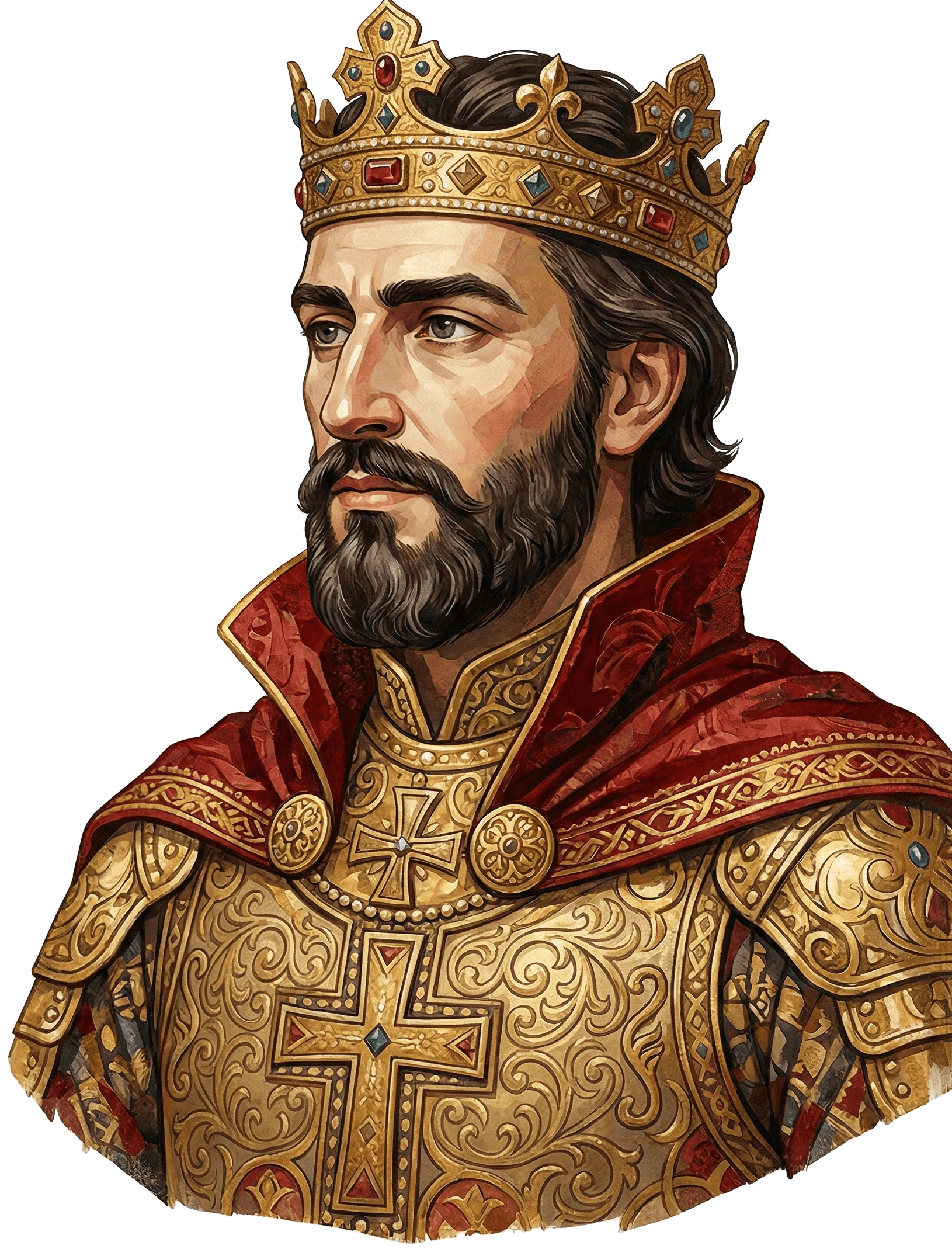
Ruben III
Rubenid Dynasty — 1175-1187 AD
Armenian Kingdom of Cilicia
Ruben III reigned from 1175 to 1187 as the ninth Lord of Cilician Armenia (Kilikia). A member of the Rubenid (Rubinyan) house and the eldest son of Prince Stephen, he assumed the throne following the assassination of his uncle, Mleh. Upon his accession, he restored internal order by executing his uncle’s murderers and moved decisively to eliminate the remaining Byzantine strongholds in Plains Cilicia (Dashitayin Kilikia), successfully liberating the cities of Adana and Msis. His reign was characterized by a compassionate and just administration and a steadfast alliance with the Frankish Crusader states, formalized by his marriage to Isabella of Toron. In 1185, he was treacherously captured by Bohemond III of Antioch during a false peace negotiation, but the kingdom's defenses were preserved by his brother, Leo. After being ransomed in 1187, Ruben III voluntarily abdicated the crown to his brother and retired to the Drazark Monastery to lead a religious life until his death.
Ruben III reigned between 1175 and 1187, inheriting the leadership of the Rubenid (Rubinyan) house during a period of transition and unrest. Raised by his uncle, Baron Bakuran, after the tragic murder of his father, Ruben assumed power after the fall of Mleh. He immediately solidified his authority by punishing the conspirators of the previous reign and suppressing the separatist tendencies of local princes. Following the death of the Byzantine Emperor Manuel I, Ruben successfully cleared the Mediterranean coast of imperial forces, ending the Byzantine presence in the Cilician heartland. He was widely praised as an excellent and humane prince who founded many pious institutions and governed with a sense of universal compassion that earned the respect of his subjects and allies alike.
The Alliance of the Levant and the Trap at Antioch
A defining feature of Ruben III’s rule was his spiritual and political proximity to the Crusaders. In 1181, he married Isabella of Toron, further integrating the Armenian Highlands of the south into the diplomatic network of the Latin East. However, this period of cooperation was tested by internal Armenian rivalries and the ambitions of the Principality of Antioch. In 1182, Ruben besieged the kinsmen of the Hethumids in their stronghold of Lampron. The Hethumids sought aid from Bohemond III of Antioch, who lured Ruben to a meeting under the pretext of signing a peace treaty. Once in Antioch, Ruben was arrested and imprisoned, while Bohemond attempted a full-scale invasion of the Cilician plains. The invasion was ultimately repelled by Ruben's brother, Leo, who maintained the kingdom’s integrity while negotiating for the king's release.
The Legacy of the Pious Monarch
The final acts of Ruben III’s reign reflected his dedication to the survival of the Armenian statehood and his religious convictions. After being ransomed by his brother in 1187, Ruben returned to his country and made the selfless decision to hand over the crown to Leo. Before his departure from political life, he provided his brother with comprehensive rules for the government of the realm. He notably enjoined Leo to ensure his daughters did not marry foreign husbands, fearing that the Armenians would be harassed by foreign tyrants and lose their cultural independence. Ruben III spent his remaining days in the Drazark Monastery, where he was buried. His life remains a testament to a just and kind ruler who prioritized the future of his people over his personal claim to the throne.
“The legacy of Ruben III endures through the centuries — a testament to the enduring spirit of the Armenian people and their unbroken pursuit of sovereignty, culture, and faith.”
Continue the Journey