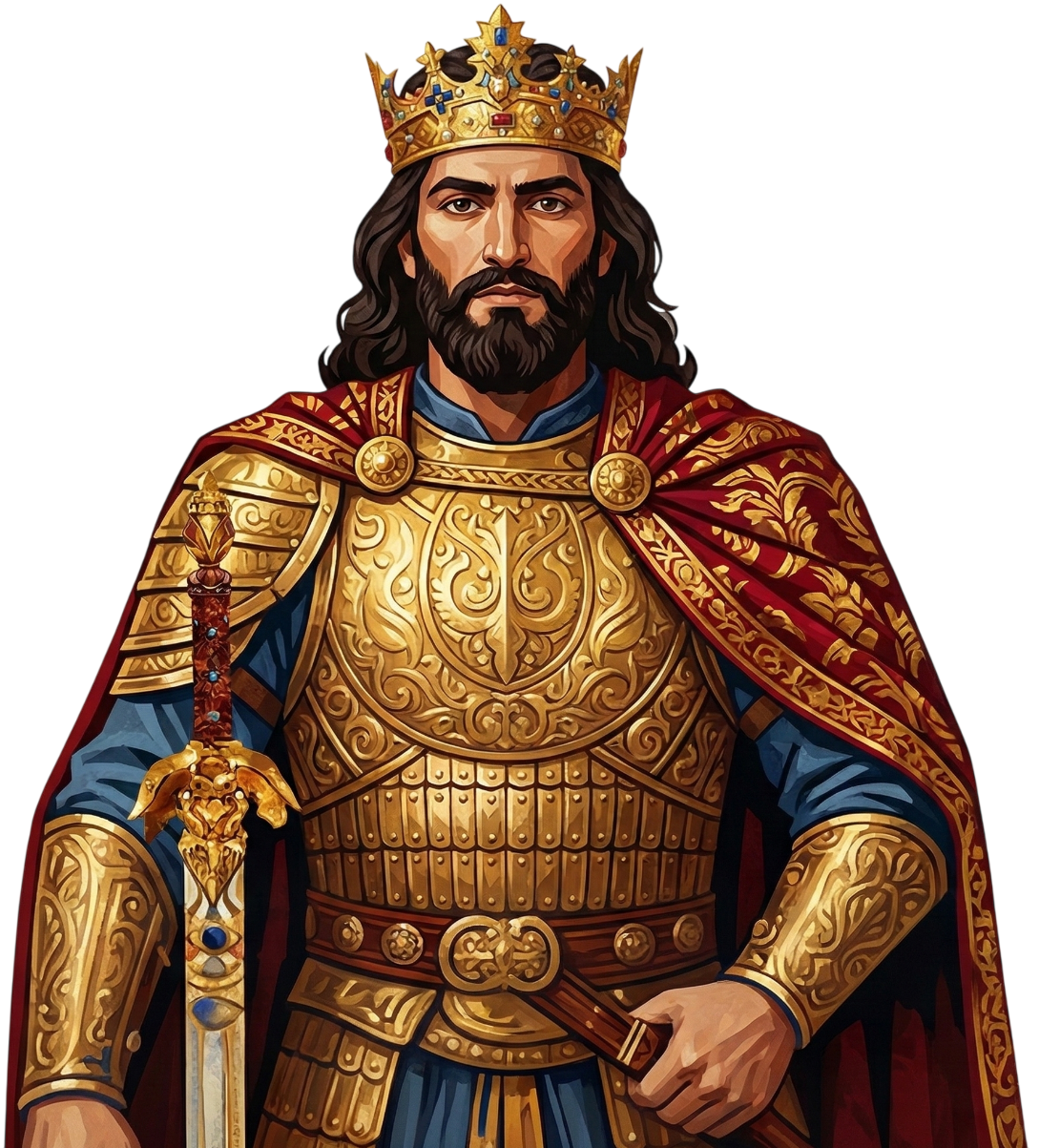
Shapur IV
Arsacid Dynasty — 416-420 AD
Arsacid Dynasty
Shapur IV reigned as the king of Sasanian Armenia from 415 to 420 AD and briefly as the monarch of the Sasanian Empire in 420 AD. The son of Yazdegerd I and Shushandukht, he was granted the Armenian crown by his father following the death of Khosrov IV, bypassing the native Arsacid heir, Artaxias IV. His reign is documented primarily by the 5th-century Armenian historians Łazar Pʿarpecʿi and Movses Khorenatsʿi. During his tenure in Armenia, Shapur IV focused on establishing friendly relations with the local nobility through a policy of reconciliation. While he made concerted efforts to convert the Christian Armenian population to Zoroastrianism, these religious initiatives were largely unsuccessful. His reign in the highlands ended abruptly when he traveled to Ctesiphon to claim the Sasanian throne following his father's murder, where he was subsequently assassinated by the Persian nobility and clergy.
Shapur IV reigned between 415 and 420 AD, representing a period of direct Sasanian royal presence in Armenia. As the eldest son of King Yazdegerd I, he was installed on the Armenian throne to secure Persian influence following the sunset of the Arshakuni line. His administrative approach in the highlands was centered on the reconciliation of the crown with the Armenian nakharars (nobles), aiming to build stable and friendly ties with the local elite. Despite this political diplomacy, a significant point of friction during his rule was his religious policy. Shapur IV actively sought to convert the Armenian people from Christianity to Zoroastrianism, though historical records indicate that these efforts failed to take root among the population.
The Pursuit of the Imperial Throne
The trajectory of Shapur IV’s reign changed violently in 420 AD when his father was murdered by Sasanian nobles in Hyrcania. Recognizing the vacuum of power in the heart of the empire, Shapur IV immediately abandoned his position in Armenia and rushed to the capital of Ctesiphon to assert his right to the Sasanian throne. His tenure as King of Kings was extremely short-lived; the Persian nobility and clergy, who were determined to exclude the sons of Yazdegerd I from power, orchestrated his murder shortly after his arrival. In his wake, the nobles elected another prince, Khosrau, to lead the empire, ending Shapur’s brief attempt to unify the Armenian and Persian crowns.
The Unique Numismatic Record
A significant archaeological testament to his reign is found in his unique coinage, which differs from standard Sasanian issues of the period. While typical coins featured the fire altar and attendants on the reverse, Shapur IV’s coins depict him wearing an unusual hat adorned with two ram's horns. Crucially, these coins lack traditional Zoroastrian ritual elements and bear a Pahlavi inscription that translates to "Shahpur the great king of the Armenians." Minted between 414 and 420 AD, this coinage highlights his specific royal status in the Armenian sector and remains one of the few physical artifacts connecting his brief reign to the history of the highlands.
“The legacy of Shapur IV endures through the centuries — a testament to the enduring spirit of the Armenian people and their unbroken pursuit of sovereignty, culture, and faith.”
Continue the Journey