Tiran
Arsacid Dynasty — 338–350 AD
Arsacid Dynasty
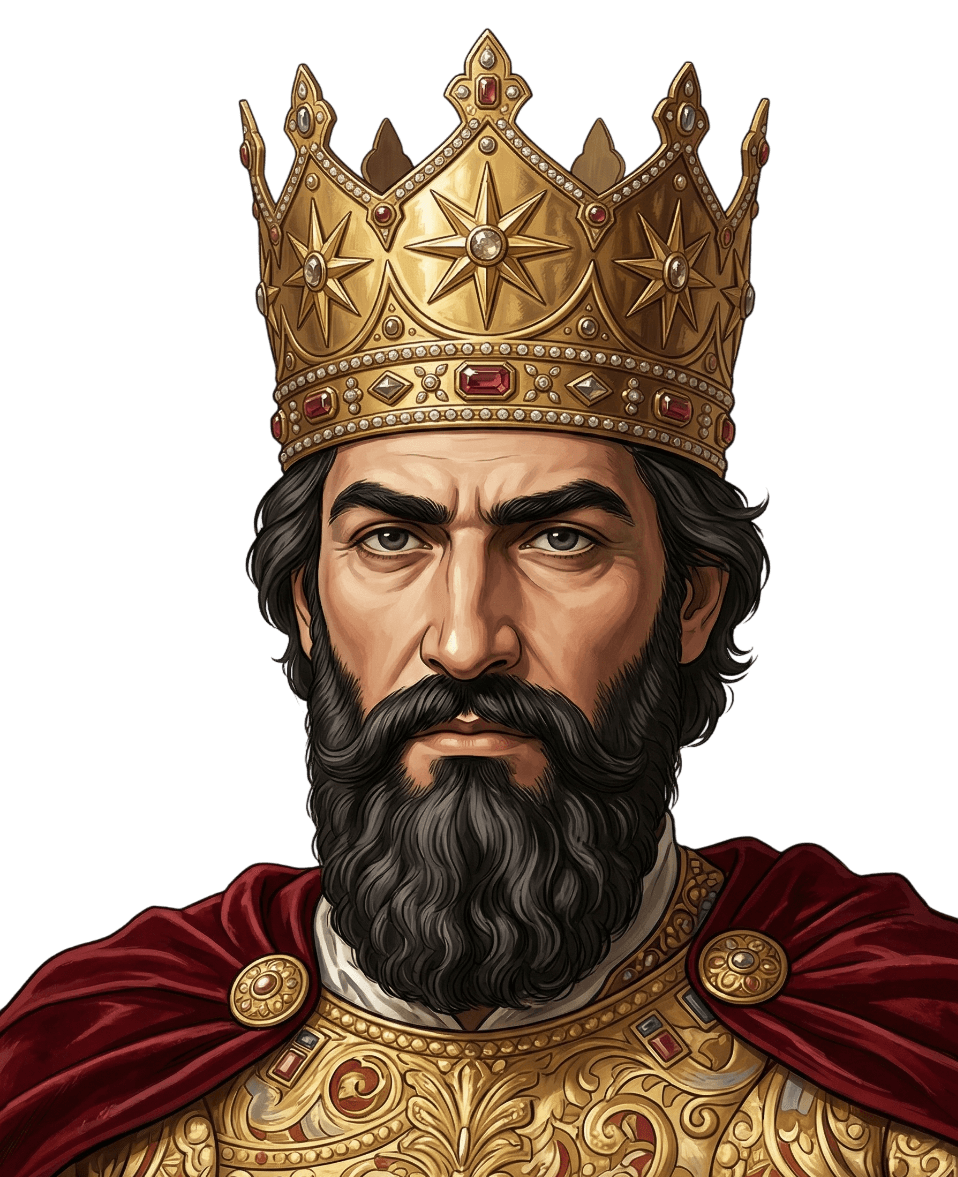
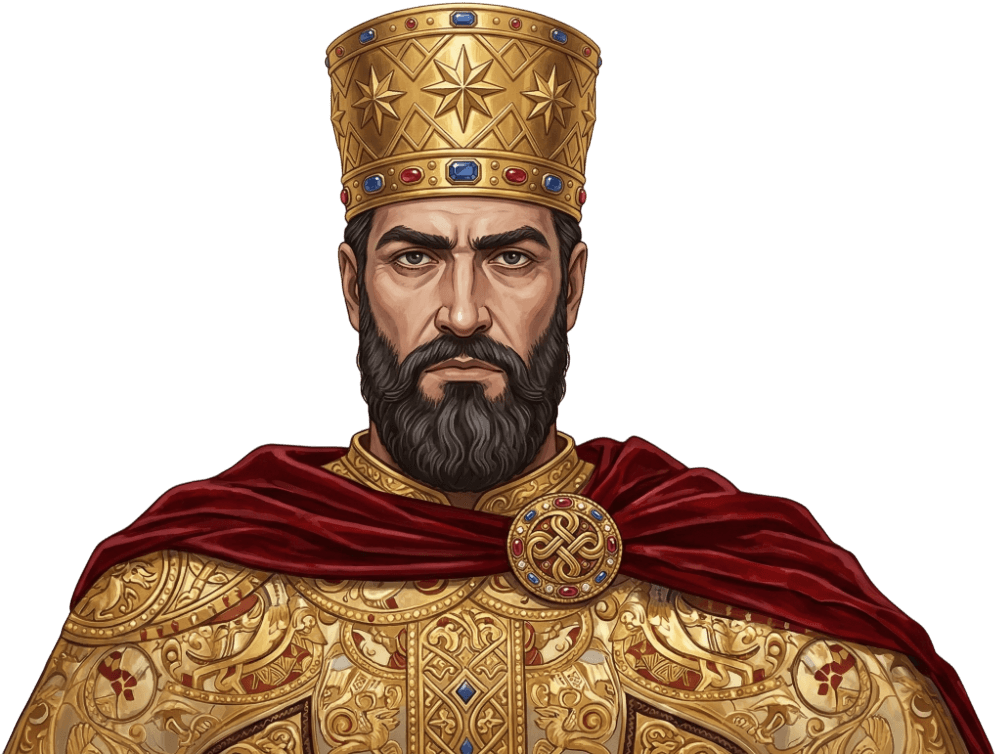
Tiran reigned from 338 to 350 AD as the monarch of the Kingdom of Armina (Greater Armenia), succeeding his father, Khosrov III Kotak. His accession was secured with the support of the Roman Emperor Constantius II, who helped him reclaim the throne following a Sasanian invasion. Initially, Tiran maintained a policy of centralization and recognized Roman suzerainty, ensuring a period of relative internal stability. The latter half of his reign was characterized by a historic antagonism between the Arshakuni crown and the Armenian Church, resulting in the assassination of Catholicos Husik. His rule ended in tragedy when he was betrayed by his chamberlain, Pisak, and blinded with burning coals by the Sasanian governor of Atropatene. After abdicating to his son, Arshak II, he spent his remaining years in retirement at Kosh (Kuash) on the slopes of Mount Aragats.
Tiran reigned between 338 and 350 AD, a period defined by the intense struggle to consolidate royal authority against the rising power of the nobility and the clergy. Following his restoration to the throne by Roman legions, Tiran pursued a policy of aggressive centralization. This path led to the first major state-church conflict in Armenian history. Tiran’s support for Arianism—aligned with contemporary Roman policy—and his desire to free the monarchy from clerical tutelage culminated in the murder of Catholicos Husik and Chorbishop Daniel. To further secure his power, he utilized officials like Hayr Mardpet to punish nakharars with separatist aspirations, most notably ordering the massacre of the Rshtuni and Artsruni houses, which deeply alienated the Armenian elite.
The Betrayal and the Blinding of the King
The collapse of Tiran’s authority was orchestrated through a blend of Sasanian aggression and internal treachery. In 350 AD, Varazshapuh, the Persian governor of Atropatene, entered into negotiations with the Armenian king. During these proceedings, Tiran was betrayed by his chamberlain, Pisak, who informed the Persians of the king's deception regarding a royal horse. Exploiting this friction, Varazshapuh lured Tiran into a trap, captured him, and brutally blinded him using glowing coals. This act of violence effectively ended Tiran's active sovereignty, as he was taken as a captive to Persia before being allowed to return to the highlands as a blind and abdicated former monarch.
Retirement at Aragats and Tragic End
The final years of Tiran were spent in political isolation in the village of Kosh (Kuash) on the slopes of Mount Aragats. Although he had passed the crown to his son, Arshak II, he remained a source of dynastic tension. According to the historian Movses Khorenatsi, the former king's life ended in further tragedy; he was allegedly strangled on the orders of his own son after a dispute concerning the treatment of Tiran's grandsons, Gnel and Tirit. Tiran’s reign is remembered as a turbulent turning point where the internal unity of the highlands was shattered by the competing interests of the crown, the Church, and the great noble houses, all while under the constant shadow of the Sasanian threat.
Royal Record
Family & Notes
Child: Arsaces II. Notes: Captured by Shapur II and blinded; his tragedy became a symbol of Armenian suffering under Persia.
Wars & Battles
2 Wars: 1. Persian-Armenian War (337-350); 2. Capture and blinding by Persia.
War Record
0 Won / 2 Lost
Territory Size
c. 350,000 km2km^2km2
Allied Rulers
Constantius II (Rome)
“The legacy of Tiran endures through the centuries — a testament to the enduring spirit of the Armenian people and their unbroken pursuit of sovereignty, culture, and faith.”
Continue the Journey