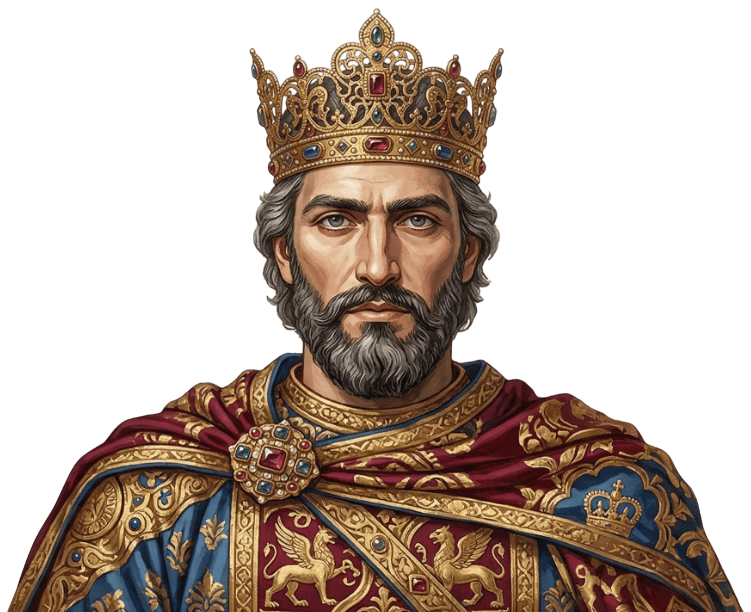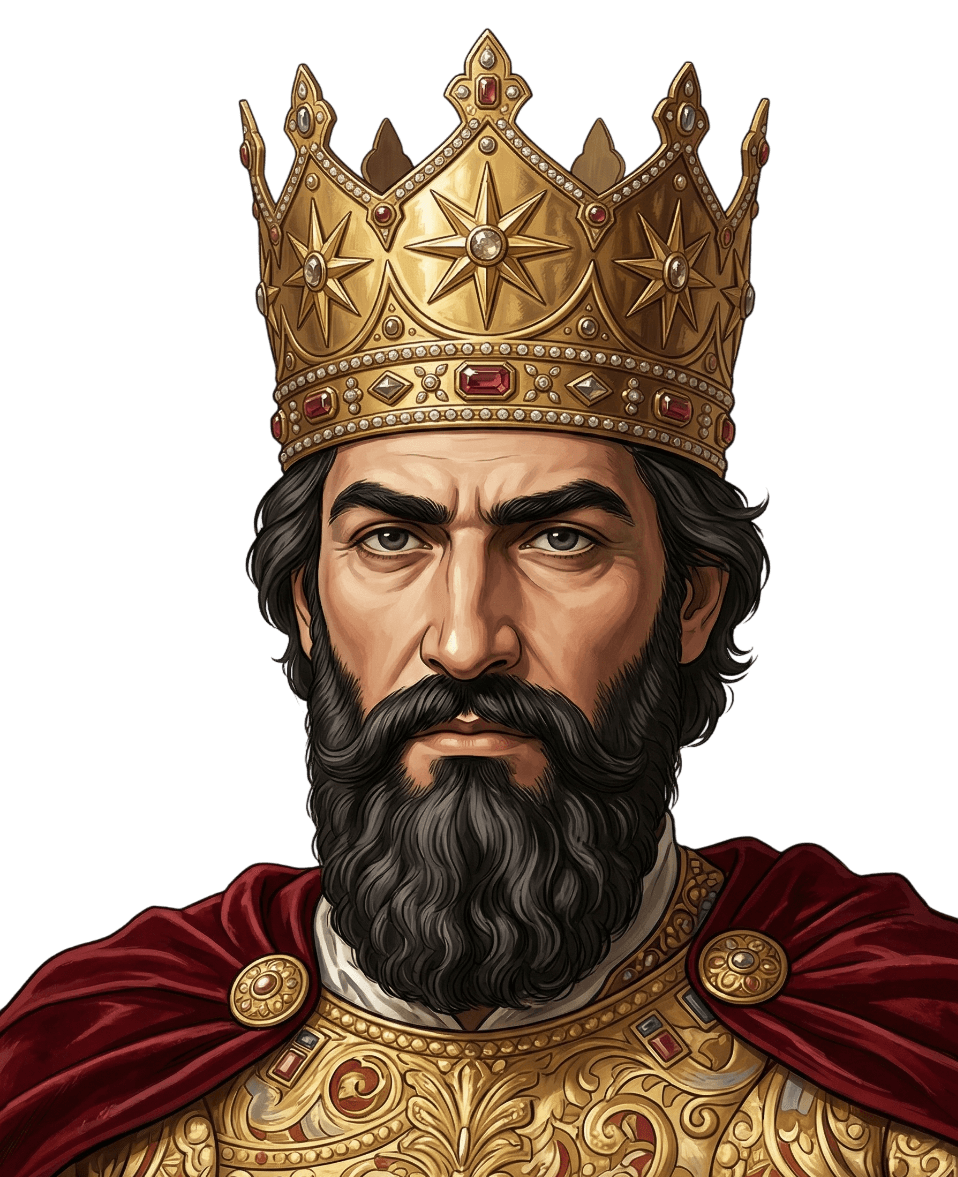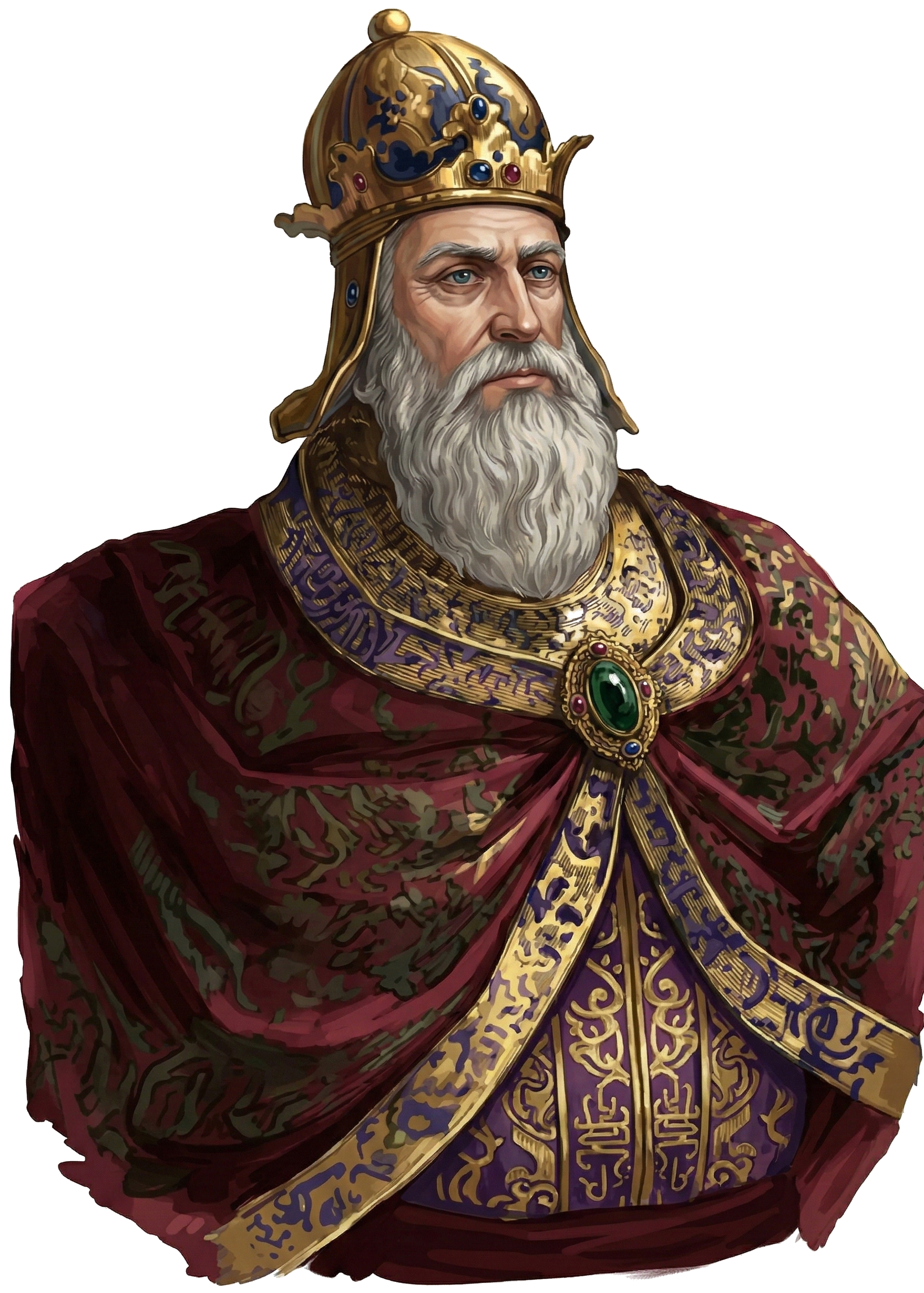
Trdat III
The Great
Arsacid Dynasty — 298–330 AD
Arsacid Dynasty
Tiridates III reigned from 298 to 330 AD as the monarch of the Kingdom of Armina (Greater Armenia). Following the assassination of his father, Khosrov II, he was raised and educated in Rome, where he gained expertise in military tactics and Roman law. In 298 AD, with the support of the Roman Emperor Diocletian, he returned to the Armenian Highlands to expel Sasanian forces and reclaim his ancestral throne. His reign is most historically significant for his official adoption of Christianity as the state religion in 301 AD, making Armenia the first nation in the world to formally embrace the faith. Alongside St. Gregory the Illuminator, he worked to replace traditional Zoroastrianism and polytheistic beliefs with the Christian faith, fundamentally reshaping the cultural landscape of the Armenian people. He was eventually poisoned in 330 AD by a conspiracy of noble families and is today venerated as a saint.
Tiridates III reigned between 298 and 330 AD, beginning his rule after decades of Sasanian dominance in the highlands. As an infant, he had been smuggled to Rome following his father’s murder by the agent Anak. During his long exile, he became a "strong and brave warrior," personally leading armies and mastering the intricacies of Greco-Roman administration. In 270 AD, his fortunes began to shift as the Roman Emperor Aurelian engaged the Sasanians on the eastern front. By 298 AD, Tiridates led a successful expedition to reclaim his kingdom, initially carrying his campaigns as far as Assyria before securing a quasi-independent protectorate status under the peace established by the Emperor Diocletian.
The Illuminator and the Conversion
The turning point of his reign—and Armenian history—was his relationship with Gregory the Illuminator, the son of his father's assassin. Initially, Tiridates imprisoned Gregory in the deep dungeon of Khor Virap after Gregory refused to place a wreath at the statue of the goddess Anahit. The King's path to faith was marked by tragedy and legend; following his execution of a group of Christian virgins led by Hripsime and Gayane, he fell into a severe illness described as adopting the behavior of a wild boar. According to the histories of Agathangelos, Gregory was retrieved from the dungeon after thirteen years and miraculously cured the King. This divine recovery prompted Tiridates III to immediately proclaim Christianity the official religion of the state, an act of defiance against Sasanian religious influence.
The Transformation of the Highlands
The latter years of Tiridates III’s reign were dedicated to the feverish spread of the new faith and the systematic dismantling of the ancient polytheistic order. This transition was met with significant resistance from those deeply rooted in Zoroastrianism, leading to armed conflicts between the royal forces and the traditionalist camps. Tiridates oversaw the destruction of countless pagan statues and temples, and with them, many of the written documents of the old culture. His aggressive centralization and religious reforms eventually led to a lethal backlash from the nakharar (noble) families. In 330 AD, a conspiracy within the nobility resulted in the poisoning of the King. Despite his violent end, his legacy as "the Great" remains anchored in his role as the architect of the world's first Christian state.
Royal Record
Family & Notes
Wife: Ashkhen. Child: Khosrov II. Notes: Adopted Christianity as state religion (301 AD); First Christian nation in history. Saint of the Church.
Wars & Battles
5 Wars: 1. Restored by Diocletian (287); 2. War of 296-298; 3. Battle of Satala (298); 4. Territorial recovery; 5. Internal pagan suppression.
War Record
4 Won, 0 Lost, 1 Int.
Territory Size
c. 350,000–400,000 km2km^2km2
Allied Rulers
Diocletian, Constantine I
“The legacy of Trdat III The Great endures through the centuries — a testament to the enduring spirit of the Armenian people and their unbroken pursuit of sovereignty, culture, and faith.”
Continue the Journey